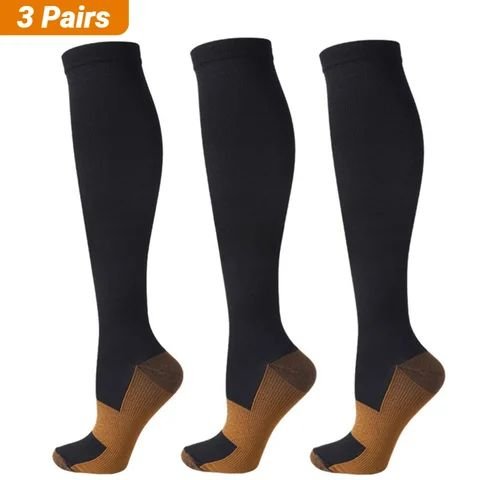
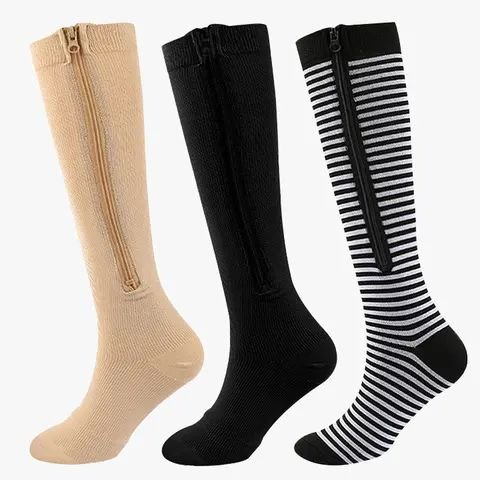
Quick answer: Compression socks are thin, so on their own they are not especially warm. In winter, wear them as the base layer and put a loose wool sock or a lined boot over the top. Keep the top band smooth, change out of damp pairs quickly, and never dry them on a radiator.
Every November, the same question lands in our inbox. Are these going to keep my feet warm?
Honest answer: not on their own. But they are a very good first layer, and once you know how to build on top of them, winter is one of the easiest seasons to wear them.
I spent years fitting hosiery in a shop, and the winter questions were always the practical ones. Boots. Wet walks. Drying. Dark mornings. So that is what this covers.
Are compression socks actually warm?
Most compression socks are knitted from nylon and elastane. That fine, close knit is what lets them hold their shape. It is also why they feel thin.
Think of them as being closer to a good pair of tights than to a chunky walking sock. They cover the skin, and they cut a little draught. But they do not trap much air, and trapped air is what keeps feet warm.
So the trick in winter is simple. Do not expect the compression sock to do the warming. Give it a partner.
Layering: what goes on top
The compression sock goes on first, against the skin. Always. Putting it over another sock makes it slip and bunch, and it will not sit where it should.
Over the top, you have two good options:
- A loose wool or wool-blend sock. The warmest choice for a cold house or a frosty walk.
- A lined boot or slipper. Lets you skip the second sock entirely.
- A bed sock or a slouchy lounge sock. Fine for evenings on the sofa.
The rule that matters most is at the top. The outer sock must be loose around the calf.
Why? Because two tight bands stacked on top of each other is exactly what leaves deep marks and makes a sock feel like it is digging in. If the outer sock has a firm cuff, fold it down or pick another pair. We wrote a whole piece on why socks roll down or dig in, and doubling up badly is one of the usual causes.
Wearing them under boots
Knee-high compression socks and winter boots get on well. The sock is thin enough that your boots still fit, which is not always true of thick walking socks.
Three things make the difference between comfortable and sore by lunchtime:
- Smooth every fold. A crease at the heel or across the front of the ankle becomes a rub point after an hour of walking.
- Check where the boot ends. If the top edge of a tall boot sits right on the sock band, they will chafe each other. Ideally the band sits clear of the boot top, either above or below it.
- Lace for the sock you are wearing. Thinner socks can mean a boot feels roomier. Snug the laces a little rather than adding a second thick sock.
For ankle boots, any length works. For knee-length riding or fashion boots, a classic knee-high is usually the best fit, because it finishes just below the knee where most boots stop short. The knee-high range is the place to look.
Wet days and muddy walks
A wet sock is a cold sock. That goes double for a thin one.
If you are heading out for a winter walk, waterproof footwear matters more than anything you wear underneath it. And if your feet do get wet, change as soon as you get in. Do not leave a damp pair on for the rest of the afternoon.
Carrying a spare pair in a coat pocket is a habit worth picking up. They weigh nothing and fold up to the size of a glove. Our guide to compression socks for hiking and long walks goes further on longer days out.
The central heating problem
Here is the twist. Winter is cold outside, but plenty of homes, offices and shops are kept very warm inside.
So you walk to work in the frost, then spend six hours in an overheated room with your feet sealed inside boots. That is when socks get sweaty, and sweaty socks start to itch and smell.
A few small fixes help:
- Swap boots for indoor shoes or slippers once you arrive, if you can.
- Take the outer wool sock off indoors and keep just the compression layer on.
- Choose a breathable knit for days you know will be warm inside.
If this sounds familiar, our guide to keeping compression socks fresh has the full routine. And if you are working from home this winter, this one on home working is worth a read too.
Drying them when nothing dries
This is where most winter damage happens. The washing will not dry outside, so everything goes on the radiator.
Please do not put compression socks there. Direct heat is hard on elastane, the stretchy fibre that lets the sock spring back into shape. Do it often enough and the sock goes baggy. Tumble dryers do the same thing, only faster.
What works instead:
- Roll the sock in a dry towel and press to squeeze the water out. Do not wring it.
- Lay it flat on an airer or a towel, in a warm room but away from the heat source.
- Wash in the evening. Most pairs are dry by morning.
The full method is in how to wash compression socks.
Getting them on in the dark
Winter mornings are dark, cold and rushed. That is not when anyone wants a fight with a snug sock.
Put them on first thing, before you have been up and about for long. Sit down to do it. Make sure your feet and legs are completely dry, because a damp leg after a shower grips the fabric and makes everything harder.
If cold, stiff fingers are the problem, a pair of rubber washing-up gloves gives you far more grip. And if pull-ons are a daily struggle, a zip-up style takes the battle out of it completely. Our step-by-step on putting them on the easy way covers the rest.
Christmas travel and long winter journeys
December means long drives to family, packed trains and the odd winter-sun flight. Hours of sitting still, often in a warm car or carriage.
Pack your pairs where you can reach them, not at the bottom of a suitcase in the boot. Put them on at home before you leave. And take breaks on long drives to get out and stretch your legs.
We have separate guides for road trips and coach journeys and for flights and travel if you are going further.
Winter at a glance
| Situation | What to wear | Watch out for |
|---|---|---|
| Frosty walk | Knee-high, loose wool sock, waterproof boots | A tight outer cuff sitting on the band |
| Office or shop with the heating up | Compression layer only, breathable shoes | Sweaty feet sealed in boots all day |
| Tall boots | Classic knee-high, smoothed flat | The boot top rubbing on the sock band |
| Evening at home | Compression sock under a loose bed sock | Doubled-up tight bands leaving marks |
| Long Christmas drive | Knee-high, put on before you set off | Sitting for hours without a stop |
How many pairs you need for winter
More than you think. In summer, a washed pair is dry in a couple of hours. In winter, it can take all night.
Add wet walks, and the odd day when you change halfway through, and the numbers creep up. Four or five pairs for daily wear is comfortable. Three is tight.
That is where multipacks earn their keep. The Soft Neutrals six-pair pack covers a working week in colours that go with dark winter clothes. If you prefer a classic look, the Classic Knee High three-pack is a good start. And if you are buying for someone else this Christmas, our gift guide will help.
Whatever you choose, get the size right first. Two measurements matter, your shoe size and your calf, and the sizing and fit guide shows you how. Then browse the whole everyday comfort range and build your winter drawer from there.
This is comfort advice, not medical advice.
The short version
- Compression socks are a thin base layer, not a warm sock - plan the layer on top.
- A loose wool sock or a lined boot over the top is fine, as long as nothing presses on the top band.
- Under boots, smooth every wrinkle and check the boot shaft does not sit right on the band.
- Change out of damp pairs as soon as you get in, and air dry them flat - never on a radiator.
- Winter needs one or two more pairs than summer, because everything takes longer to dry.
Frequently asked questions
Are compression socks warm?
Not especially. Most are a fine knit of nylon and elastane, so they feel closer to a pair of tights than to a walking sock. In winter, wear them as the first layer and add warmth on top with a loose wool sock or a lined boot.
Can you wear normal socks over compression socks?
Yes. A loose sock over the top adds warmth and is how many people get through a cold snap. The one rule is that it must not be tight at the top, because a second band sitting on the first is what leaves marks and feels uncomfortable.
Can you wear compression socks with boots?
Yes, and knee-highs suit most winter boots well. Smooth the sock so there are no folds at the ankle or heel, and check where the boot shaft ends. If its top edge lands right on the sock band, the two will rub on a long walk.
Can I dry compression socks on a radiator?
It is best not to. Direct heat wears out the elastane, which is the part that gives the sock its stretch and recovery. Lay them flat on a towel or hang them on an airer in a warm room instead, and they are usually dry overnight.
How many pairs do I need for winter?
One or two more than you would in summer. Socks take longer to dry when the heating is the only warm air in the house, and wet walks mean more changes. Four or five pairs is a comfortable number for daily wear.