Quick answer: Under trousers they are completely invisible, so anything goes and you may as well buy what you like. With skirts and dresses, treat them as knee-high socks and match the colour to your shoes. With trainers, a sports pattern reads as entirely normal.
Years of fitting people for hosiery taught me that styling advice here is mostly permission - most of what people worry about is not noticeable to anyone else.
Under trousers: nothing to think about
The easiest case and the one most people are in. A knee-high under a trouser leg is completely hidden, so colour, pattern and everything else are entirely your business.
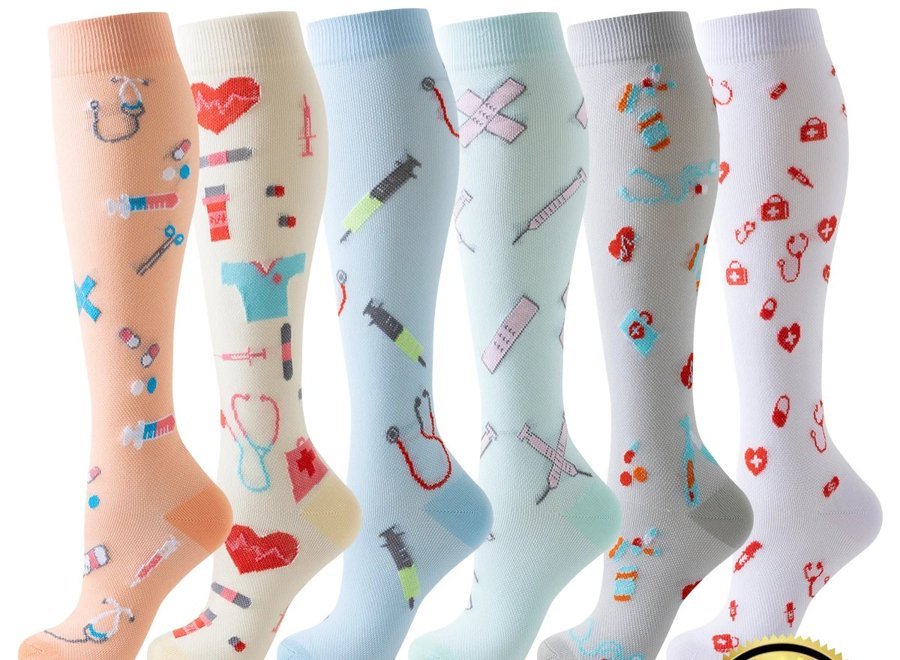
This is the argument for buying the design you actually like rather than the one you think is sensible - if nobody sees it, please yourself - the everyday range has the options.
With a skirt or dress
Where people worry, and the answer is straightforward: treat them as knee-high socks, because that is what they are.
Two approaches work. Match the sock to your shoes, which makes the leg read as one continuous line and is the more discreet option. Or match it to something else in the outfit - a colour in a print, a scarf - which makes it look deliberate.
What draws the eye is a sock that matches nothing and contrasts with both the hem and the shoe.
With boots
The easiest combination there is. A knee-high sock inside an ankle or calf boot is invisible, and inside a taller boot it simply is not seen at all.
The only thing to check is bulk - a thicker sock inside a close-fitting boot changes the fit, so try the combination before a long day - the walking guide covers the same point for boots generally.
With trainers
A knee-high with trainers reads as sportswear, which is completely normal now and has been for years.
A sports-looking design leans into that - Navy Runner and Match Day both look like what they look like, and nobody thinks twice - the sport range has more.
If you want less leg on show, an ankle style disappears entirely - the ankle range covers those.
With shorts
Honest answer: a knee-high with shorts is a strong look and you either want it or you do not.
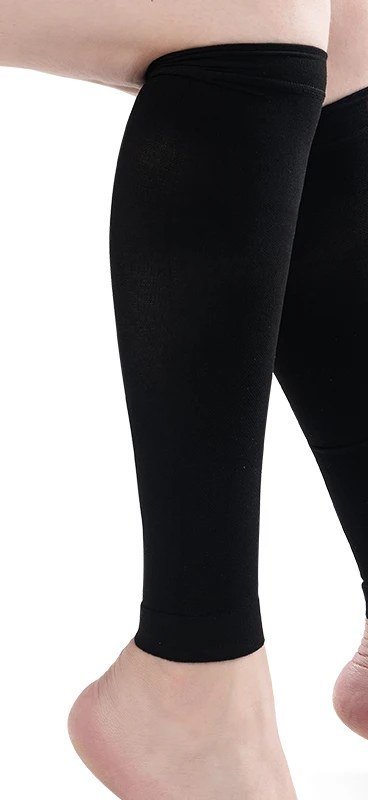
Where it works is with sportswear, where it reads as running kit. Where it stands out is with casual summer shorts. If you want the calf covered in summer without that, a footless sleeve under a longer short or a light trouser is the alternative - the footless range covers those.
Colour, in general
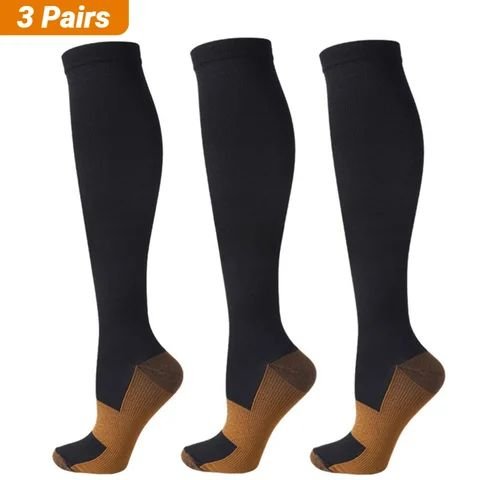
Black is the safest and goes with everything. Navy and charcoal are almost as easy. A colour or pattern reads as chosen, which is exactly what you want if you would rather nobody thinks about it at all - this guide covers what reads as clinical.
The one to avoid, if the concern is looking prescribed, is beige or a skin tone - the everyday range covers choosing.
For work
Whatever the dress code allows, and most allow more than people assume. Plain black clears almost everything, and dark patterns clear most - the work socks guide covers policies.
Open-toe with sandals
Comes up every summer. Open-toe styles do allow it, and whether it works is entirely a matter of what you are comfortable wearing.
The more discreet route in warm weather is a footless calf sleeve with ordinary sandals, which leaves the foot bare - the open-toe knee-high is there if you want the sock.
Length, and where the top sits
Worth checking on yourself rather than assuming.
A knee-high should finish a couple of finger-widths below the back of the knee. Too high and it catches when you bend; too low and it sits on the widest part of the calf, where it is most likely to feel tight and most likely to roll.
People with shorter legs frequently find standard knee-highs sit too high, which is a length problem rather than a width one - the knee-high range has different lengths, and the ankle range is the alternative.
Layering in winter
A practical detail for cold months.
A compression sock under a boot with a thick outer sock over the foot only does not work - it bunches. If you want more warmth, choose a warmer compression sock rather than adding a layer over it, or use a footless sleeve with whatever warm sock you like underneath.
That second option is the flexible one, and it is why sleeves suit British winters - the footless range covers them.
Two practical things that matter more than styling
The top band should not roll. A rolled or dug-in band is visible through trousers and looks wrong under anything. That is a sizing issue rather than a styling one - the sizing guide covers it.
The sock should stay up. A sock sliding down mid-calf looks untidy regardless of what it is. Again, sizing.
The summary
Under trousers, wear what you like. With a skirt, match your shoes. With trainers, lean into sportswear. And get the size right, because a well-fitting sock in any colour looks better than a badly fitting one in the perfect shade - the everyday comfort guide covers the wider subject.
Three combinations that always work
If styling is not something you want to think about every morning, these three cover most of a week.
Dark trousers, plain dark knee-high, any shoe. Completely invisible, works for office or smart-casual, and nothing shows when you sit down. This is the default and there is no reason to overthink it.
Jeans, trainers, patterned pair. The sock shows at the ankle when you sit or walk, and a pattern makes that read as deliberate rather than as hosiery. The easiest weekend answer there is.
Skirt or dress, black opaque knee-high, boots. The boot covers the sock top entirely, so the length stops mattering. This is the combination to use if you dislike the idea of a visible cuff at all.
What is harder is a skirt with low shoes, because the sock top sits in the open on the bare leg. A plain black pair handles it, but it is the one case where people tend to want tights instead.
Build from the three above and add the awkward cases later. Nobody needs a styling system for socks.
This is comfort advice, not medical advice.
The short version
- Under trousers they are invisible, so buy the design you actually like.
- With a skirt, match the sock to your shoes for a continuous line.
- A knee-high with trainers reads as sportswear and has done for years.
- Avoid beige and skin tones if the worry is looking prescribed.
- A band that rolls or a sock that slides is a sizing problem, not a styling one.
Frequently asked questions
How do I wear compression socks with a skirt?
Treat them as knee-high socks, because that is what they are. Match them to your shoes for a discreet continuous line, or to something else in the outfit so it reads as deliberate.
Do they look odd with trainers?
No - a knee-high with trainers reads as sportswear and has done for years. A sports-looking design leans into it entirely. If you want less leg on show, an ankle style disappears completely.
What about with boots?
The easiest combination there is, since the sock is hidden inside the boot. The only thing to check is bulk, because a thicker sock inside a close-fitting boot changes the fit - try it before a long day.
What colour is safest?
Black, which goes with everything, then navy and charcoal. A colour or pattern reads as chosen, which helps if you would rather nobody thinks about it. Avoid beige and skin tones if that is the concern.
Can I wear open-toe styles with sandals?
You can, and whether it works is entirely down to what you are comfortable wearing. The more discreet warm-weather route is a footless calf sleeve with ordinary sandals, which leaves the foot bare.