Quick answer: For hiking, fit inside your boot matters more than anything - check thickness before the specification, and never wear a new sock on a big day. Descents are harder on legs than climbs, and a spare pair in the pack is worth its weight.
A hill day is longer than a long run, on worse ground, carrying something, in stiff boots. It asks different things of a sock.
The boot decides the sock
Start here, because everything else is secondary. A walking boot is fitted to a particular sock thickness, and changing that changes the fit of the boot.
A thicker sock makes a boot tighter, which causes pressure points and blisters. A thinner one leaves your foot moving inside the boot, which causes rubbing. Neither is a sock problem exactly - it is a system.
So try any new sock with your actual boots at home, on a short walk, before a big day.
Never new on a big day
The rule that saves more days out than any other. Not new boots, not new socks, not a new pack.
A sock that is fractionally wrong is unnoticeable on a walk round the block and a genuine problem eight miles into a hill day when you are two hours from the car - the sport and running range covers what to try.
Going down is the hard part
Something walkers learn the hard way. Climbing is hard work for your lungs; descending is hard work for your legs, and it is descents that leave you stiff the next day.
A long descent at the end of a day, when you are already tired and your boots are hot, is where blisters and sore legs come from. Plan for it rather than treating the summit as the finish - the recovery guide covers the day after.
Knee-high or sleeve
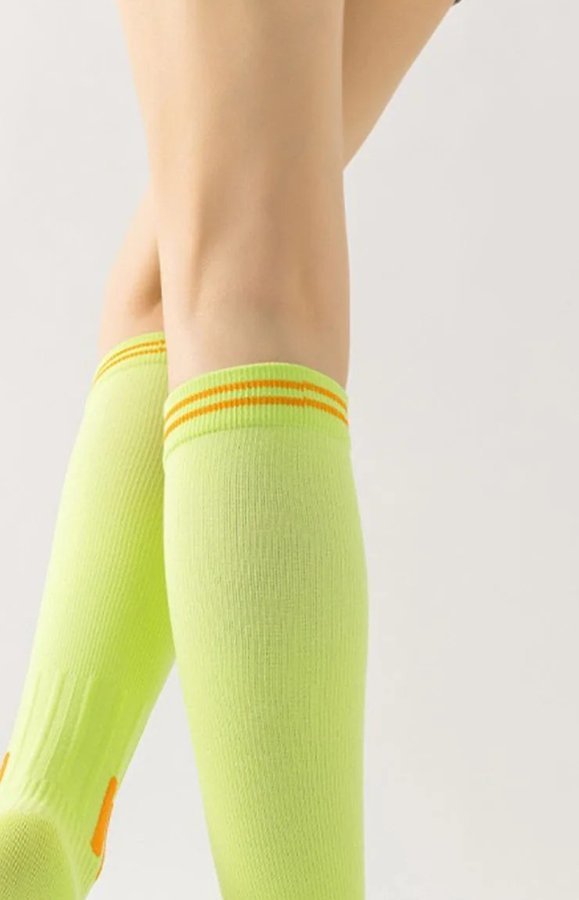
A knee-high sock handles both foot and calf, and sits under a boot cuff where it can help with rubbing at the ankle.
A calf sleeve over your usual walking sock leaves your proven boot-and-sock combination alone, which is a real advantage if that combination works. It also comes off easily if you get too warm.
For anyone whose boots fit well with their current socks, the sleeve is the lower-risk route - the footless range covers those.
Fabric on a wet day
British hill weather means damp is a matter of when rather than whether.
Avoid cotton entirely for this - it holds water, gets heavy, and a wet cotton sock inside a boot is how blisters happen. Synthetic-rich or wool-blend socks manage damp far better - the fabric guide covers what each fibre does.
A spare pair in the pack
The single best thing you can carry for the weight. Changing into dry socks at lunchtime on a wet day transforms the afternoon, and it costs almost nothing to carry.
Keep them in a bag so they stay dry even if the pack does not - the multipacks make a dedicated spare set cheap.
Sizing for walking
Measure your calf and buy to it. Walkers, like runners and cyclists, often have more calf than a shoe-size chart assumes.
Be a little more generous than you would for sitting still - you are moving for hours and a sock that is slightly firm at the start of the day is considerably firmer by hour six - the sizing guide covers measuring, and the wide-calf range covers fuller calves.
Multi-day walking
A different problem, because you cannot wash and dry properly between days.
Take more pairs than days if you can. Wash what you can in the evening, dry them overnight somewhere with air, and accept that they may not be fully dry - which is another argument for having a spare rather than depending on one pair drying - the care guide covers doing it away from home.
After a hill day
Boots off as soon as you reach the car. A change into dry socks and something soft for the drive home, which is often an hour or more of sitting still after a long day - the classic case for wearing a pair in the car - the driving guide covers that.
Then twenty minutes with your feet up when you get in, before anything else.
Blisters, and where they come from
Almost always friction plus damp rather than the sock itself.
A sock that fits and stays put does not move against your skin. One that is loose, or that has gone damp and heavy, slides slightly with every step, and that is what does the damage over a long day.
Which is why fit and fabric matter more than thickness, and why a dry spare pair at lunchtime is worth carrying - the multipacks make a spare set cheap.
Everyday long walks
Everything above scales down. A long day walking a city, a coastal path or a dog walk that turns into an expedition asks the same things - a fitting sock, no new kit, and a plan for the descent or the way back - the running and sport guide covers the wider subject.
Changing socks on the hill
A spare pair in the pack is standard advice. When to actually use them is less often said.
The moment to change is at the top, before you start down. Your feet are at their warmest and dampest, the descent is the part that does the damage, and a dry sock going into the hard half of the day is worth a great deal.
It takes four minutes. Boots off, feet aired for a minute, dry sock on, boots back on with the laces redone properly.
Lacing is the other half of it. Tighten the upper part of the lacing for the descent so the foot does not slide forward in the boot. A sliding foot on a long descent is where blisters and bruised toenails come from, not the sock.
Keep the damp pair in an outside pocket rather than against anything else in the pack.
If it is a wet day and a dry sock will be wet within ten minutes, do not bother. The change is worth it on a dry descent and pointless in sideways rain.
This is comfort advice, not medical advice.
The short version
- The boot decides the sock - a thicker or thinner sock changes how the boot fits.
- Never wear a new sock on a big day; the block-round-the-corner test is not enough.
- Descents are what leave you stiff, not climbs. Plan for the way down.
- No cotton on a hill - wet cotton inside a boot is how blisters happen.
- A spare pair in the pack is the best thing you can carry for the weight.
Frequently asked questions
Will compression socks fit inside walking boots?
It depends on thickness rather than specification. A boot is fitted to a particular sock thickness, so a thicker sock makes it tighter and a thinner one lets your foot move. Try any new sock with your boots first.
Should I wear new socks on a hill day?
Never. A sock that is fractionally wrong is unnoticeable on a walk round the block and a genuine problem eight miles in when you are two hours from the car. Test everything on a short walk first.
Why do my legs hurt more after descending?
Because descending is hard work for your legs where climbing is hard work for your lungs. A long descent at the end of a day, when you are tired and your boots are hot, is where most of the damage happens.
What fabric should I avoid for hiking?
Cotton. It holds water, gets heavy and a wet cotton sock inside a boot is how blisters happen - which matters in British hill weather, where damp is a question of when rather than whether.
Is a spare pair worth carrying?
It is the best thing you can carry for the weight. Changing into dry socks at lunchtime on a wet day transforms the afternoon. Keep them in a bag so they stay dry even if the pack does not.