Quick answer: A home working day removes the commute, the walk to meetings and the trips across an office, so step counts can be very low. Getting up every half hour matters more than anything you wear, and a deliberate walk replaces the commute you no longer have.
I moved from a shop floor to a desk at home, and the thing that surprised me was not sitting more - it was how little I moved even compared with an office.
What working from home removes
People think of home working as removing a commute, and it removes considerably more than that.
The walk to the station. The walk from the station. The trip to a meeting room. Going to someone's desk instead of messaging them. Walking to lunch. The stairs. A full office day contains a surprising amount of incidental movement, and none of it is deliberate exercise - which is exactly why nobody replaces it.
A home day can be a few hundred steps if nothing forces you out - the desk jobs guide covers the office version.
The first thing to fix
Not socks. Getting up.
Every half hour, stand and move for a minute or two. Make a drink, walk to another room, go up and down the stairs once. It does not need to be exercise and it does need to be regular.
Use a timer, because concentration is exactly when you forget, and the busiest days - the ones where you most need it - are the ones you are least likely to notice.
Replace the commute deliberately
The habit that helps most. A short walk before you start work and another when you finish does two things: it gets you moving twice a day, and it marks the boundary between work and home that a commute used to provide.
Ten or fifteen minutes is enough. The point is that it happens rather than that it is long - and it is the case for a comfortable knee-high pair you can walk in.
Where compression socks fit
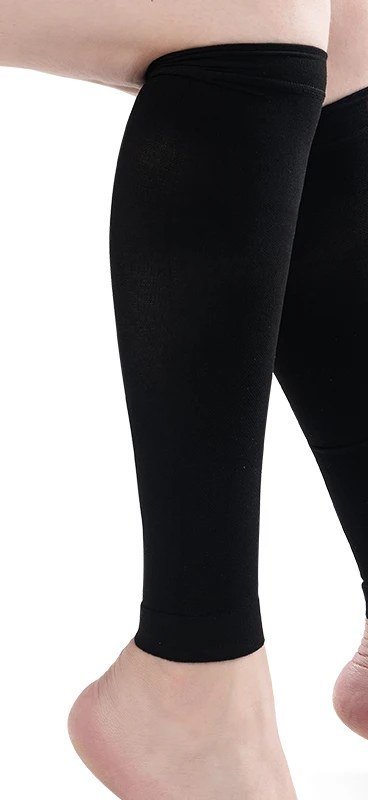
A long day sitting still is the situation they suit, and a home working day is a particularly still version of it.
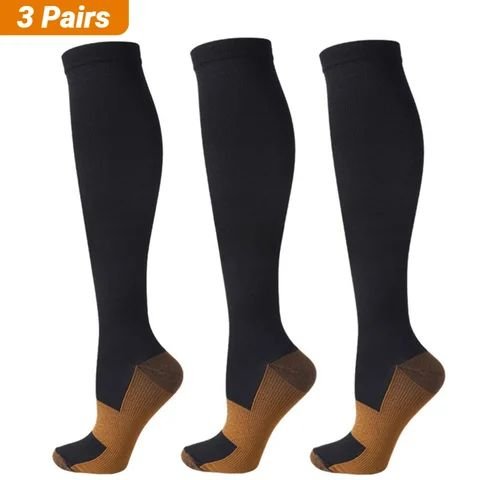
Knee-high, in your measured calf size, in something comfortable - and since nobody sees them, this is the case where you may as well buy the pair you like - the everyday range covers the options, and the sizing guide covers measuring.
Where you are working matters
A dining chair for eight hours is a genuinely poor arrangement, and a sofa is worse. Neither supports you at a height that lets your feet sit flat with your knees roughly level with your hips.
If you cannot have a proper chair, a cushion to raise you and a box to rest your feet on gets you most of the way there for almost nothing - the work range covers standing days if you use a standing desk.
Standing desks at home
Useful if you alternate and unhelpful if you commit. Standing still for eight hours is its own problem, as anyone in retail will tell you.
Half an hour standing, half an hour sitting, moving in between, is the version that works - the on-your-feet guide covers what standing all day involves.
Video calls
The specific thing that makes home working stiller than office working. Back-to-back calls mean sitting in one position, in frame, for hours, without even the movement of walking between meetings.
Stand for some of them - most cameras only show you from the chest up, and nobody notices. Schedule gaps between calls rather than stacking them, and use those gaps to move rather than to check messages.
Lunch
Eat it somewhere other than your desk, ideally away from the room you work in - the bestsellers cover what to wear on a home day. It is the easiest break to take and the first one to disappear, and eating at a keyboard turns the middle of the day into more sitting rather than less.
Going outside for even ten minutes of it is better still.
The kitchen table problem
Common and worth naming, because it is a different issue from having a bad chair.
Working somewhere the household also uses means packing up and setting up daily, which quietly discourages a footrest, a cushion and everything else that makes a setup comfortable. The result is people working in worse conditions at home than they would tolerate anywhere else.
A box that lives under the table and comes out with the laptop solves most of it - the work range covers standing setups, and the on-your-feet guide covers those days.
The end of the day
Take the socks off, and get your feet up for twenty minutes if your legs feel heavy - higher than a chair, with something under your calves.
A walk in the evening is worth more than either, and it is the thing most likely to be skipped when the office is also the living room - the comfort tips guide covers what helps at the end of a day.
How many pairs
Three for a five-day week - one on, one in the wash, one clean. Multipacks are cheaper per pair and rotating them makes each last longer - the multipacks cover it, and the washing guide covers keeping them going.
The afternoon, and what actually shifts it
The three o'clock slump at home is a different animal from the office version, because there is nothing structural to break it up.
In an office you get up constantly without deciding to. Someone talks to you, you fetch water, you walk to a meeting. At home you can sit from nine until five without once standing up, and legs notice that long before your concentration does.
Three things work, and none of them is a sock.
- Put the kettle at the other end of the house if you can. A deliberately inconvenient kettle is worth more than any reminder app.
- Take calls standing or walking. Audio-only calls are the easiest win in the day.
- Put your feet up properly at lunch, higher than your hips, for ten minutes. Not on a footstool - actually up.
Where the socks help is the hours in between, when you are sitting still whatever your intentions were. They are the floor, not the fix.
If you do one thing, make it the lunch break. A proper ten minutes changes the afternoon more than the morning coffee does.
This is comfort advice, not medical advice.
The short version
- Home working removes far more incidental movement than just the commute.
- Getting up every half hour matters more than anything you can wear.
- Replace the commute deliberately with a short walk before and after work.
- Stand for some video calls - most cameras only show you from the chest up.
- A dining chair for eight hours is poor and a sofa is worse.
Frequently asked questions
Why is working from home worse for my legs than an office?
Because it removes far more than the commute - the walk to meeting rooms, going to someone's desk, walking to lunch, the stairs. A full office day contains a lot of incidental movement nobody replaces.
What is the single most useful change?
Getting up every half hour and moving for a minute or two - a drink, another room, the stairs once. Use a timer, because concentration is exactly when you forget and busy days are when you most need it.
How do I replace the commute?
A short walk before you start and another when you finish. Ten or fifteen minutes each is enough. It gets you moving twice a day and marks the boundary between work and home that a commute used to provide.
What about back-to-back video calls?
They are what makes home working stiller than office working, since there is not even a walk between meetings. Stand for some of them - most cameras show you from the chest up - and schedule gaps to move in.
Does where I sit matter?
A great deal. A dining chair for eight hours is poor and a sofa is worse. If a proper chair is not possible, a cushion to raise you and a box to rest your feet on gets you most of the way for almost nothing.