Quick answer: Alternate rather than committing to either. Standing all day is as demanding as sitting all day, so switch every half hour or so, use a footrest, wear supportive shoes, and take the breaks you are entitled to rather than working through them.
I worked at a standing desk through most of my second pregnancy, having been told it was the better option, and it took me a while to work out that all day standing was not better - alternating was.
I am not a clinician. Anything about your health at work is a conversation for your midwife, GP or occupational health rather than a blog.
Standing all day is not the healthy option
The idea that sitting is bad and therefore standing must be good skips a step. Standing still for eight hours is genuinely demanding - ask anyone who works in a shop - and it becomes more so as pregnancy goes on.
What actually helps is changing position regularly. The desk is a tool for doing that, not a position to commit to - the on-your-feet guide covers what standing all day involves.
A workable rhythm
Roughly half an hour standing, half an hour sitting, and a short walk somewhere in each hour. Adjust to whatever suits you - the point is that neither position lasts long enough to become uncomfortable.
Set a reminder, because deep work is exactly when you forget, and the days you most need the reminder are the days you are least likely to notice.
A footrest changes standing considerably
The single most useful addition. Resting one foot on a low box or rail, and swapping feet every so often, changes the position of your back and hips and makes standing far more comfortable for longer.
It is a genuinely old trick - it is why bars have foot rails - and it works. The work range is built around the same problem.
What you are standing on matters
A hard floor is hard whether you are pregnant or not. An anti-fatigue mat makes a real difference and is inexpensive.
Shoes matter more. Supportive shoes with room in them beat almost anything else, and this is not the moment for anything with a heel or anything unsupportive. Feet can change during pregnancy, so shoes that were fine earlier may not be now.
Socks
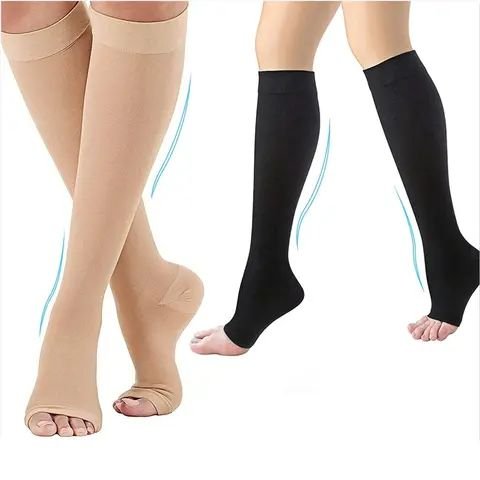
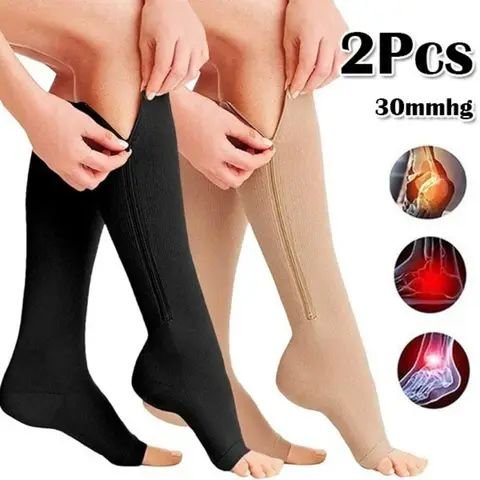
If you wear compression socks, a day alternating between standing and sitting is exactly the sort of day they suit - it is a long stretch upright with long stretches of stillness in it.
Put them on first thing before you get up properly, and make sure the fit is current rather than what fitted three months ago - the trimester sizing guide covers re-measuring, and the maternity range covers styles.
Desk height as things change
Worth revisiting rather than setting once. As a bump grows, the comfortable distance from the desk changes, and a desk set up at fourteen weeks may have you reaching awkwardly by thirty.
Check that you are not leaning forward to reach a keyboard, and that a seated position leaves room rather than pressing against the desk edge.
Sitting properly, when you sit
Feet flat on the floor or on a footrest. Knees roughly level with hips. The front edge of the chair not pressing into the backs of your thighs.
A footless calf sleeve is worth knowing about here too, since it goes over your own socks and can be put on without reaching your feet - the footless range covers those. If the chair is too high, a footrest fixes it far more cheaply than a new chair - the desk jobs guide covers the seated half.
Breaks
Take them, properly, away from the desk and sitting down with your feet up if there is anywhere to do that. Eating lunch at a desk while working is not a break and it is the first thing to go on a busy day.
This matters more as pregnancy goes on, and it is also the thing people feel least entitled to.
Talk to your employer
Worth saying plainly. In the UK, employers have duties around risk assessment for pregnant employees, and adjustments to a workstation, seating, or how long you spend standing are entirely reasonable things to raise.
Speak to your manager, HR or occupational health rather than quietly coping. A footrest, a better chair, a mat or a change to how long you are on your feet are small asks.
Working from home
Often harder, because there is no walk to a meeting room and no colleague's desk to wander over to. Deliberate breaks matter more, and the step count in a home working day can be startlingly low - the everyday range covers that.
Meetings
A practical detail that adds up over a week.
Long meetings are sitting still, and back-to-back ones are sitting still for hours without the breaks a normal working day gives you. If they are online, stand for some of them. If they are in a room, it is usually acceptable to stand at the back for part of a long one, and nobody minds as much as you expect.
Getting up between meetings rather than moving straight from one call to the next is the easier version - the maternity range covers what to wear for a desk day.
The end of the day
Twenty minutes with your feet up higher than a chair before you start the evening, rather than after it - the comfort tips guide covers what helps, and the pregnancy comfort guide covers the whole subject.
This is comfort advice, not medical advice.
The short version
- Standing all day is not the healthy option - alternating is.
- Roughly half an hour standing, half an hour sitting, and a short walk each hour.
- A footrest to rest one foot on changes standing comfort considerably.
- Revisit desk height as things change; a setup from fourteen weeks may not suit at thirty.
- Employers have duties around risk assessment - a mat, a chair or a change is a small ask.
Frequently asked questions
Is a standing desk better during pregnancy?
Not automatically. Standing still for eight hours is genuinely demanding, as anyone who works in a shop will tell you. What helps is alternating - the desk is a tool for changing position, not a position to commit to.
How often should I switch between sitting and standing?
Roughly every half hour, with a short walk somewhere in each hour. Set a reminder, because deep work is exactly when you forget and the busiest days are when you are least likely to notice.
What makes standing more comfortable?
A footrest to rest one foot on, swapping feet periodically - it is why bars have foot rails and it genuinely works. An anti-fatigue mat helps too, and supportive shoes with room in them matter most of all.
Should I change my desk setup as pregnancy goes on?
Yes, rather than setting it once. As a bump grows the comfortable distance from the desk changes, so check you are not leaning forward to reach a keyboard or pressing against the desk edge when seated.
Can I ask my employer for adjustments?
Yes. UK employers have duties around risk assessment for pregnant employees, and a footrest, a better chair, a mat or a change to how long you spend standing are all reasonable things to raise.