Quick answer: A desk day is hours of sitting still, which asks something similar of your legs to a long flight. Knee-high socks suit it, but getting up regularly matters more - a timer every half hour does more than anything you can wear.
I spent years fitting hosiery to people who stood all day, and then went and got a job where I sat all day, which turned out to have its own problems.
Sitting is not resting
The thing people find counterintuitive. A desk day feels like the easy option next to a shift on your feet, and by six o'clock your legs can still feel heavy and stiff.
The reason is straightforward: you have been in one position, barely moving, for hours - which is the same basic situation as a long flight, minus the cabin air - the travel guide covers the flying version.
What to wear
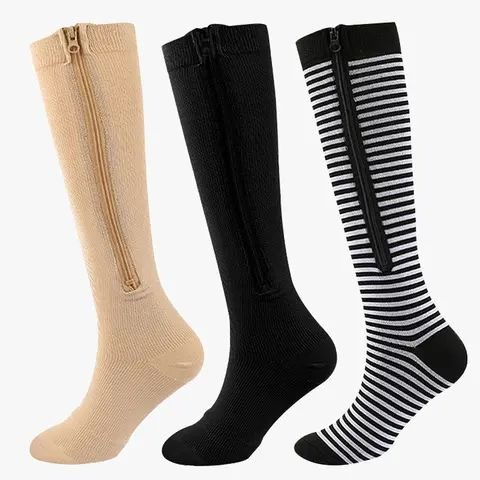
Knee-high, in your measured calf size, in something breathable. Exactly what you would wear to fly, and it fits under work trousers without anyone knowing.
Plain and Simple and Soft Neutrals are the discreet options - the everyday range has more.
Getting up matters more than the socks
Worth saying plainly even though we sell socks. The single most useful change for a desk worker is getting up regularly, and no garment substitutes for it.
Every half hour, stand up. Walk to get water, take a call standing, use the stairs. It does not need to be exercise - it needs to be not sitting.
A timer works far better than intention, because deep work is exactly when you forget.
The chair is doing more than you think
Worth checking before buying anything.
If the front edge of your seat presses into the back of your thighs, the chair is too high or too deep for you, and no sock compensates for that. Feet flat on the floor, knees roughly level with hips, and a gap between the seat edge and the back of your knees is what you are aiming for.
A footrest fixes a chair that is too high far more cheaply than a new chair does - the everyday range covers the socks side of it.
Things that help at the desk
- Feet flat on the floor, or on a footrest if your chair is too high for you.
- Not crossing your legs for hours - swap sides at least.
- Ankle rolls and calf raises under the desk, which nobody can see.
- A chair at the right height, so the front edge is not pressing into the back of your thighs.
- Water within reach, which also forces you to get up periodically.
Standing desks
Better than sitting all day and not a solution on their own - standing still for eight hours is its own problem, and one that people who work in shops know all about.
The useful version is alternating: an hour standing, an hour sitting, and moving about in between. If you stand a lot at a desk, everything in the on-your-feet guidance applies - the on-your-feet guide covers it.
Working from home
Often worse than an office, because there is no walk to a meeting room, no commute and no colleague's desk to wander over to. The total number of steps in a work-from-home day can be startlingly low.
Deliberate breaks matter more here than anywhere - the women's range covers that.
Long days and late finishes
The days when people first notice this are the long ones - a deadline, a run of back-to-back calls, a day where lunch happened at the desk.
Those are exactly the days worth wearing them, and exactly the days you are least likely to get up. Set the timer on those days especially.
The commute counts
Easy to forget. If you sit on a train for forty minutes each way, that is well over an hour of additional sitting on top of the day.
Putting the socks on before you leave home means they cover the commute too, which is the same argument as putting them on before a flight - the flights and travel range covers longer journeys.
After work
Take them off when you get home. If your legs feel heavy, twenty minutes with your feet up beats sitting on the sofa in the same position you have been in all day.
A walk in the evening is worth more than either - the everyday comfort guide covers what to change into.
How many pairs
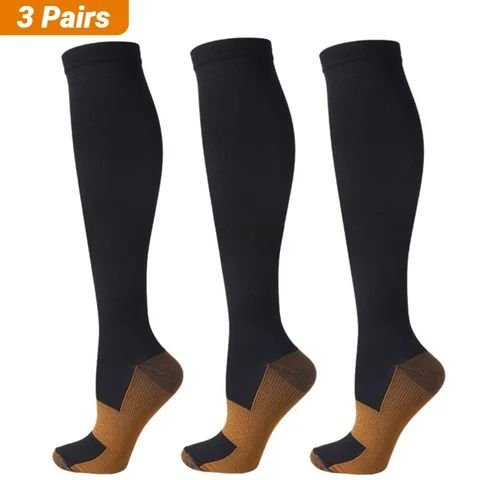
Three for a five-day week is comfortable - one on, one in the wash, one clean. Multipacks make that cheap, and rotating them makes each pair last longer - the multipacks cover it.
One small habit worth building: every time you refill your water, take the long way back to your desk. A few extra minutes on your feet each hour adds up by home time.
This is comfort advice, not medical advice.
The short version
- A desk day is hours of sitting still, which asks something similar of your legs to a flight.
- Getting up every half hour matters more than anything you can wear.
- A timer beats intention, because deep work is exactly when you forget to move.
- Standing desks help only if you alternate - standing still all day is its own problem.
- The commute counts; put them on at home so they cover it.
Frequently asked questions
Why do my legs feel heavy after a day at a desk?
Because sitting is not resting. You have been in one position barely moving for hours, which is much the same situation as a long flight, and it accumulates even though the day felt like the easy option.
What should I wear at a desk?
Knee-high, in your measured calf size, in a breathable blend - the same thing you would wear to fly. Plain designs sit under work trousers without anyone knowing they are there.
Do compression socks replace getting up?
No, and it would be dishonest to suggest otherwise. Standing up every half hour is the single most useful change a desk worker can make, and no garment substitutes for it.
Are standing desks the answer?
Only partly. Standing still for eight hours is its own problem, as anyone who works in a shop will tell you. The useful version is alternating - an hour standing, an hour sitting, and moving in between.
Is working from home worse than an office?
Often, because there is no walk to a meeting room, no commute and nobody's desk to wander over to. The total step count in a work-from-home day can be startlingly low, so deliberate breaks matter more.