Quick answer: Measure your calf rather than relying on an old number, re-measure every few weeks, and buy in stages rather than all at once. Many people move from ordinary pull-ons early on to open-toe or zip-up styles later, as bending becomes the limiting factor.
I bought six pairs of the same thing at fourteen weeks, both times, and both times I regretted it by month seven.
I am not a clinician. This is about fit and comfort only - anything else is a question for your midwife.
Two things change, and they change separately
Your measurements, which may shift over the months - calf, ankle and sometimes shoe size.
What you can physically do, which changes much more predictably. Reaching your own feet gets harder from roughly the middle onwards and is a genuine obstacle by the end.
The second one catches more people out than the first, and it is the reason a perfectly good sock ends up unworn.
Roughly how it goes
First trimester. Usually nothing much changes. If you already wear them, carry on with what you have.
Second trimester. This is when most people start, typically because standing for any length of time begins to feel like more effort. Measure your calf properly at this point rather than guessing - the sizing and fit guide shows where.
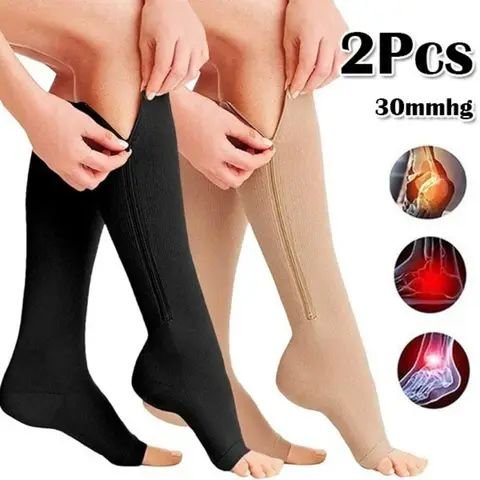
Third trimester. Bending is the limiting factor. This is where easy-on styles stop being a nicety - the zip-up range covers those.
How to buy without waste
In stages, and this is the main practical advice on the page.
Buy one or two pairs when you start. Wear them. Re-measure at around the seven-month mark and buy what you need for the last stretch then, in whatever style you can actually manage by that point.
Buying a drawer full at twenty weeks is how you end up with six pairs you cannot get on - the maternity range covers the styles.
Measuring properly
Widest part of the calf, standing, first thing in the morning, tape snug but not pulled tight. Write the number and the date down, because you will want to compare.
Re-measure every few weeks, and any time a pair starts feeling different from how it felt when it was new. A sock that has started to dig is telling you something.
When you are between sizes
Go up, every time. A slightly generous calf is comfortable; a slightly tight one leaves a mark and gets abandoned.
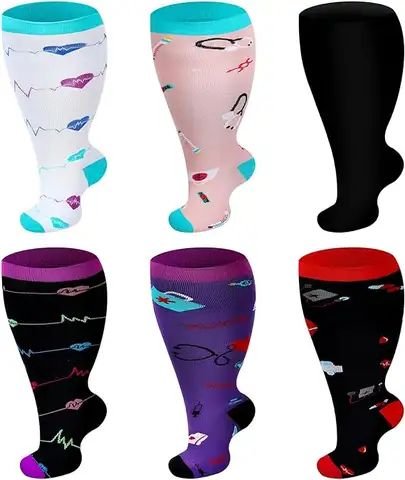
This matters more in pregnancy than at any other time, because the direction of travel is towards needing more room rather than less - the wide-calf range is cut genuinely wider rather than just longer.
The top band
The single most common complaint, and it is a sizing symptom rather than a design fault. Look for a wide, soft, flat top rather than a narrow elasticated one, and check it leaves at most a faint line.
If it grooves, size up. Do not roll it down - that concentrates everything into a band, which is the opposite of what you want - the pregnancy comfort guide covers this.
Shoe size
Worth mentioning because it surprises people. Some find their shoe size changes during pregnancy, and for some it does not go back afterwards.
If your shoes have started feeling different, check the sock foot length too - a sock that is now short will pull the heel out of place and put the graduated section in the wrong spot.
What to do with the pairs that no longer fit
A practical question, since buying in stages means ending up with sizes that have been outgrown.
Keep them rather than getting rid of them. Sizes frequently come back afterwards, and a pair that is too small at eight months may be exactly right three months after the birth. Wash them, dry them properly and put them away - the care and FAQs guide covers storing them so the stretch survives.
Styles by stage
| Stage | Usually easiest |
|---|---|
| Early | Ordinary pull-on knee-high |
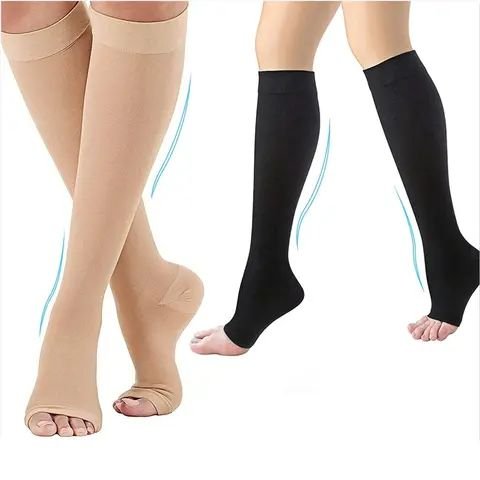
| Middle | Open-toe, or pull-on with the roll-up technique |
| Late | Zip-up, or footless sleeves over your own socks |
| After the birth | Whatever you can manage one-handed |
Two pairs that do different jobs
A practical arrangement that worked for me and for a lot of people I heard from.
Keep one style you can put on easily on a bad morning - a zip-up or an open-toe - and one style you prefer wearing when you have the time and energy to get them on. The easy pair is the one that actually gets worn on the days it matters most.
Having both means a difficult morning does not end with bare legs simply because the good socks were too much effort - the maternity range covers both.
After the baby
Plenty of people keep wearing them through the early months, which involve a surprising amount of standing and walking about at odd hours. Re-measure once more at that point - the zip-up range covers that stretch.
This is comfort advice, not medical advice. Browse the pregnancy comfort guide or open-toe and footless.
The short version
- Two things change separately: your measurements, and what you can physically reach.
- Bending is the limiting factor from the middle onwards, and it catches more people out.
- Buy in stages - one or two pairs to start, then re-measure around seven months.
- When between sizes go up, because the direction of travel is towards more room.
- A top band that grooves is a sizing symptom; never roll it down to cope.
Frequently asked questions
Will my compression sock size change during pregnancy?
It can - calf, ankle and sometimes shoe size may all shift. Measure properly rather than relying on an old number, and re-measure every few weeks or whenever a pair starts feeling different from new.
When do most people start wearing them?
Usually in the second trimester, when standing for any length of time starts to feel like more effort. Some wear them earlier for long journeys only. There is no rule, and this is about comfort.
Should I buy several pairs at once?
No - buy in stages. One or two pairs when you start, then re-measure around seven months and buy for the last stretch in whatever style you can actually manage by then. Buying six early is how they end up unworn.
What style is easiest late in pregnancy?
Zip-up, because it opens flat and closes around the leg with no bending or hauling. Footless calf sleeves are the other option, since they go over your own socks and skip the foot entirely.
What if the top of the sock digs in?
Size up. It is a sizing symptom rather than a design fault. Look for a wide, soft, flat top band, and never roll it down to cope - that concentrates the pressure into a narrow band, which is worse.