Quick answer: Book an aisle seat, put comfortable socks on before you leave home, keep water within reach, and get up and move far more often than you would otherwise. Plan more stops than the journey seems to need and build in time rather than pushing through.
I travelled a fair amount through both pregnancies and the journeys that went well were the ones with slack built into them.
Anything medical - whether to travel, when, and any advice specific to you - is a conversation for your midwife or GP. What follows is comfort only.
Book the aisle
The single most useful decision, on a plane or a train.
You will want to get up more often than usual, and an aisle seat means doing that without asking two people to move each time. In practice that is the difference between getting up when you want to and deciding it is too much bother.
On a plane, a seat near the toilets is worth having for the same reason, even though it is busier.
Socks on before you leave
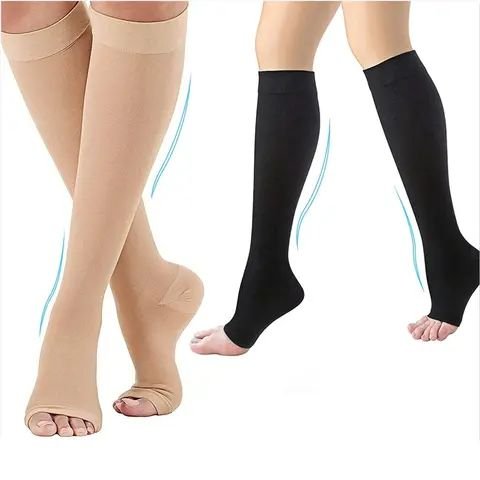
Whatever you are wearing, get it on at home, sitting down, before the day starts. Trying to manage a snug knee-high in a train toilet or an aircraft seat is not realistic at any stage and becomes impossible later on.
Easy-on styles matter more here than anywhere - a zip-up opens flat and closes around the leg with no bending - the zip-up range covers those, and the zip-up range covers the options.
Get up far more often than feels normal
On a long flight, every hour or so when the aisle is clear. On a train, walk the carriage. On a drive, stop more often than the route planner suggests - every ninety minutes rather than every three hours.
This is the part that makes the biggest difference and the part people skip because they want to get there.
What to have within reach
- Water, more than you think, and where you can reach it without standing.
- Snacks, because journey catering never matches when you are hungry.
- A layer, since temperature control on any form of transport is a lottery.
- Your notes and any paperwork, if you are travelling later on.
- A spare pair of socks for a long journey.
Long drives
Being the passenger is harder on your legs than driving, because a driver is constantly making small movements and a passenger is not.
Either way, stop properly - get out, walk about, do not just pull in and stretch by the door. And if you are the one driving, adjust the seat so you are not reaching for the pedals, which becomes more of an issue as the months go on - the road trip guide covers ground travel.
Trains
In many ways the easiest, because you can get up and walk about whenever you like. Book a seat rather than travelling on spec, take the aisle, and use the walk-about freedom you have - it is the main advantage a train has.
Reserve if the service is busy. Standing for an hour on a crowded train is the version to avoid - and if it happens anyway, a knee-high pair is considerably better than bare legs for it.
Flights
Everything in the general flying guidance applies, with more emphasis on getting up and on having help with bags - the travel guide covers the journey.
Ask for help with overhead lockers rather than lifting. Crew do this constantly and nobody thinks anything of it.
Coaches
The version worth thinking about hardest, because you have the least control.
Stops are set by the driver rather than by you, legroom is tighter than a train, and getting up mid-journey is often not practical. If there is a choice between a coach and a train for a long journey later on, the train is considerably easier to be comfortable on.
If the coach is the option, take the aisle, use every stop offered, and wear something you can adjust - the flights and travel range covers the socks.
Build in slack
The advice I would give above all. Leave earlier than you need to, allow longer connections than you normally would, and do not plan anything for the hour you arrive.
A journey with time in it is a completely different experience from the same journey run to the minute, and that gap matters more when you are already tired.
When you arrive
Twenty minutes with your feet up before you do anything else, higher than a chair, with something under your calves.
Then a short walk if you can manage it. Both are better than going straight into whatever you came for - the after-the-journey guide covers arriving.
Where the toilets are
Unglamorous and genuinely useful to know before you settle in.
On a plane, a seat within reasonable reach of a toilet saves a long walk each time, and you will be making that trip more often than usual. On a train, know which end of the carriage they are in before you sit down rather than after.
It sounds trivial and it removes a small friction that repeats all journey - the pregnancy comfort guide help for the same reason, since you are not fighting anything each time you move.
What to pack for the journey itself
Comfortable shoes you can get on without bending. Loose clothes. Socks that fit properly now rather than the ones that fitted three months ago - re-measure before a trip if it has been a while - the trimester sizing guide covers that.
And a clean pair for the return journey, kept aside rather than dug out of a case on the last morning - the multipacks make that easy.
This is comfort advice, not medical advice.
The short version
- Book the aisle - it decides whether you actually get up or decide it is too much bother.
- Socks on at home; managing them in a train toilet or aircraft seat is not realistic.
- Get up every hour on a flight and stop every ninety minutes on a drive.
- Being a passenger is harder than driving, because drivers keep making small movements.
- Build slack into the journey - a trip run to the minute is a different experience entirely.
Frequently asked questions
What seat should I book when travelling pregnant?
The aisle, on a plane or a train. You will want to get up more often than usual, and an aisle seat means doing that without asking two people to move - which is the difference between doing it and not.
How often should I get up on a long journey?
Every hour or so on a flight when the aisle is clear, walking the carriage on a train, and stopping every ninety minutes rather than every three hours on a drive. It is the part people skip and it matters most.
Is driving or being a passenger easier?
Driving, oddly - a driver keeps making small movements at the pedals and mirrors, while a passenger sits still. Either way, stop properly and get out and walk rather than stretching beside the car.
When should I put compression socks on?
At home before you leave, sitting down. Managing a snug knee-high in a train toilet or an aircraft seat is not realistic at any stage of pregnancy and becomes impossible later on.
What should I do when I arrive?
Twenty minutes with your feet up higher than a chair, with something under your calves, before you do anything else. Then a short walk if you can manage it, rather than going straight into whatever you came for.