Quick answer: Get the boring things right and the flight looks after itself: socks on before you leave home, shoes off in the seat, water within reach, a warm layer, and a proper walk every few hours. Comfort on a long sector is mostly preparation rather than luck.
Fourteen hours is not a longer version of a two-hour flight. It is a different thing, and the people who arrive well are almost always the ones who prepared rather than the ones who got lucky with a seat.
Before you go
Compression socks on at home, over clean dry feet. Slip-on shoes. Loose trousers rather than anything that grips at the calf or waist. A layer you can put on without standing up.
That is four decisions made before you leave the house, and each of them is much harder to fix once you are on board - the wearing guide covers the sequence.
Choosing where to sit
An aisle seat if moving matters more to you than sleeping. You can stand without negotiating with two strangers, which means you will actually do it rather than deciding it is too much trouble.
A window seat if sleeping matters more - you have something to lean on and nobody climbs over you.
Bulkhead rows give legroom and take away under-seat storage, which matters if you wanted your bag at your feet. Rows near galleys and toilets are busier and brighter all night.
The first hour
Get settled properly rather than dozing off in your coat. Shoes off, bag with your essentials at your feet, water sorted, layer to hand.
Five minutes of organising at the start saves you an awkward hour later when the lights are down and your neighbour is asleep across the thing you need - the packing guide covers what to keep within reach.
Water, properly
Cabin air is dry, and most people arrive having drunk far less than they think. Fill a bottle after security and keep it where you can reach it without asking anyone to move.
The service comes round when it comes round, and a small cup of water twice in fourteen hours is not enough. Tea, coffee and alcohol are all pleasant and none of them counts towards this.
Moving about
A proper walk every few hours, when the seatbelt sign is off and the aisle is clear. Not a shuffle to the toilet and straight back - walk the length of the cabin, stand for a minute, stretch a little at the back where there is room.
In the seat, roll your ankles, flex your feet, and change position rather than settling into one shape for eight hours. None of it is dramatic and all of it is better than nothing.
Sleeping, if you can
Eye mask that actually blocks light. Earplugs or noise-cancelling headphones. A layer, because it gets cold at night. Shoes off, socks on.
Put the seatbelt over the blanket so nobody wakes you to check it - a genuine crew habit and it works. And try to sleep according to where you are going rather than where you came from.
The socks specifically
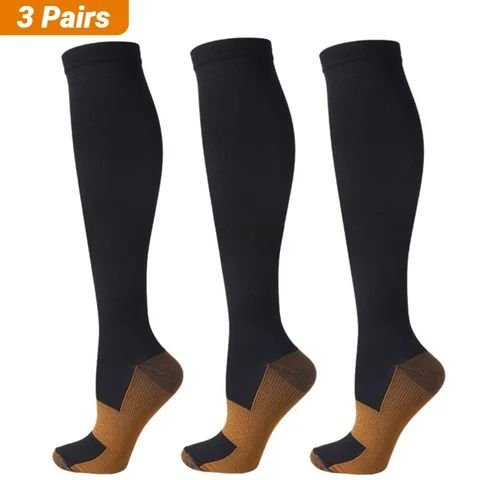
Knee-high, in a calf width measured to your leg, in a breathable blend - the sizing and fit guide covers measuring. On before you leave, off when you get to where you are staying.
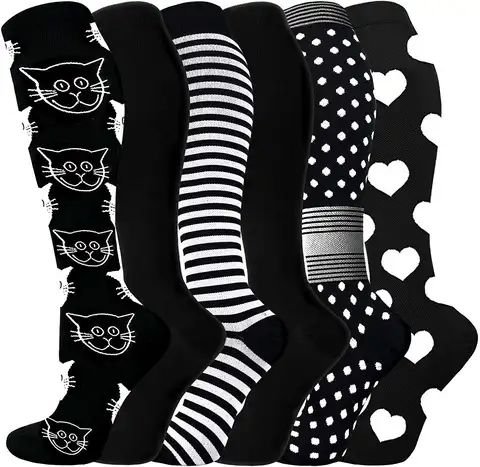
If getting them on is awkward, a zip-up pair removes that entirely, and a multipack gives you the spare without a second order.
A spare pair in the cabin bag, changed somewhere in the second half, is the single biggest morale improvement available on a long sector - the flights and travel range covers what to take, and the buying guide covers choosing.
Eating
Meal timings on a long sector rarely match when you are hungry, and they are set by the schedule rather than by you. Something dry in your bag - oatcakes, nuts, a cereal bar - covers the gap without melting or annoying your neighbours.
Eating according to your destination's mealtimes rather than your departure's helps you settle faster at the other end.
The last hour
Shoes back on before the final approach rather than in the last five minutes when everyone is doing it at once. Fresh socks if you are changing. Bag repacked while there is still room to move.
Change into a clean pair for the transfer if you have one - the knee-high range covers what to travel in. Arriving organised makes the transfer considerably less unpleasant - the after-the-flight guide covers landing day.
What not to do
- Do not put socks on in the seat. There is no room and you will do it badly.
- Do not stay in one position for the whole flight because you finally got comfortable.
- Do not take the socks off at the transfer because home feels close.
- Do not book anything important for the evening you land.
If you fly this route often
Build a routine rather than deciding each time. Same bag layout, same socks, same seat preference, same plan for the transfer. The people who fly constantly and arrive fine are not tougher - they have simply stopped making the same decisions from scratch every trip - the full travel guide has the whole approach.
This is comfort advice, not medical advice.
The short version
- Four decisions before you leave home: socks on, slip-on shoes, loose trousers, a layer.
- Aisle for moving, window for sleeping - choose the one that matches your priority.
- Fill a water bottle after security; the trolley is not enough over fourteen hours.
- Walk the cabin every few hours rather than shuffling to the toilet and back.
- Seatbelt over the blanket so nobody wakes you to check it.
Frequently asked questions
What makes the biggest difference on a long flight?
Preparation rather than luck. Socks on before you leave, slip-on shoes, loose trousers, a warm layer, water within reach and a proper walk every few hours. Each is much harder to fix once you are on board.
Should I choose an aisle or window seat?
Aisle if moving about matters more to you, because you can stand without negotiating with two strangers and will therefore actually do it. Window if sleeping matters more - something to lean on and nobody climbing over you.
How much water should I drink?
More than the trolley provides. Fill a bottle after security and keep it within reach. A couple of small cups over fourteen hours is not enough, and tea, coffee and alcohol do not count towards it.
What counts as moving about enough?
A proper walk the length of the cabin every few hours, not a shuffle to the toilet and back. In the seat, roll your ankles, flex your feet and change position rather than settling into one shape for eight hours.
How do I sleep on a long sector?
An eye mask that genuinely blocks light, earplugs or noise-cancelling headphones, a warm layer, shoes off and socks on. Put the seatbelt over the blanket so nobody wakes you to check it.