Quick answer: Put them on at home over clean dry feet, wear loose trousers and slip-on shoes, keep them on through the whole journey including transfers, move about when the aisle is clear, and take them off once you are home with your feet up.
Passengers asked me this constantly, usually somewhere over the Atlantic and usually too late to act on. Here is the whole sequence, in order.
Before you leave home
Put them on there. Not at the gate, not in the seat. You need somewhere to sit, both hands and a minute - and you want them on for the drive and the queueing, which is more sitting and standing than people count.
Clean, dry feet. Damp feet make a snug sock much harder to get on, and it is a long time to be wearing them.
Nails trimmed. Unglamorous but true - a long toenail is the most common way a good sock gets a hole in it on day one.
the easy-on range covers the technique if it is a struggle.
What to wear with them
Slip-on shoes, or something you can undo quickly. You will want them off, and wrestling with laces in a seat is nobody's idea of a good time.
Loose trousers. Jeans that grip the calf are working against the sock. Anything with a soft leg is better.
A layer for your top half, because cabins get cold and comfortable legs do not help much if the rest of you is freezing.
the travel guide covers the rest of the bag.
In the seat
Take your shoes off - it makes a real difference over hours. Keep the socks on. Roll your ankles and flex your feet now and then, which is easy to do without disturbing anyone.
Get up and walk when the seatbelt sign is off and the aisle is clear. Aisle seats make this far easier, which is exactly why crew choose them.
Drink water. Cabins are dry and the tea and coffee do not really count.
Through the transfer
Keep them on. This is where most people undo the effort - they land, feel nearly home, and change in the terminal. A connection with a three-hour wait and another sector is still a long day for your legs.
If you have a spare pair, a change on a long multi-sector trip is pleasant. Do it in a seated area, not a cubicle floor - the flights and travel range covers longer trips.
When you land
Keep them on until you are home and can sit properly. Then take them off, put your feet up for a bit, and let your legs be. A shower and a walk about the house are both pleasant at this point - the travel guide covers landing day.
What not to do
- Do not put them on in the seat. There is no room and you will not get them on properly, which is worse than not wearing them.
- Do not wear a pair that is too tight because it is the only one you have. An uncomfortable sock for eleven hours is genuinely miserable - the fit guide covers what too tight means.
- Do not put yesterday's pair back on. Pack a clean spare.
- Do not roll the top down if it feels tight. That concentrates the pressure into a band, which is the opposite of what you want. Change the pair instead.
Overnight sectors
The one case where the routine changes a little.
On a night flight most people keep them on and try to sleep, which is fine. Shoes off, blanket over, and the same socks you boarded in. What is worth avoiding is putting a fresh pair on halfway through in the dark in a cramped seat - do it before boarding or not at all.
If you land in the morning and go straight into a day, keep them on until you can properly sit down - the knee-high range covers that stretch.
If your feet swell out of your shoes
Common on long sectors, and mostly a shoe problem rather than a sock problem.
Wear shoes with some give - trainers, loose boots, anything with laces you can slacken - rather than the pair you bought because they looked smart. Take them off in the seat and put them back on before landing rather than in the last five minutes.
Do not size down your socks to compensate. A tighter sock is not the answer and will make the whole flight less comfortable - the travel range is sized for this.
Short flights
Under a couple of hours, most people do not bother, and that is reasonable. It is worth remembering the journey is longer than the flight, though - the drive, the queue, the wait and the transfer add up more than the sector does.
Which pair
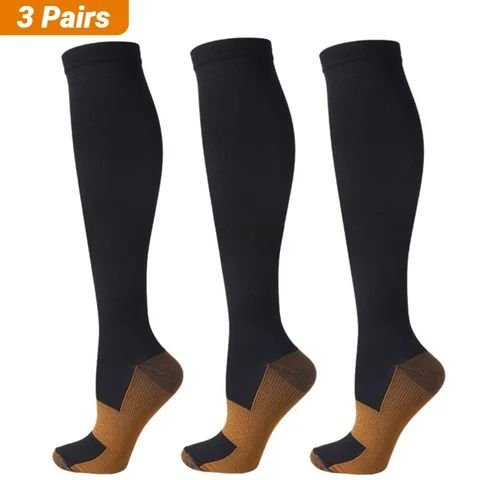
Knee-high, in a calf width measured to your leg, in something breathable. The classic three-pack covers a return trip with a spare - the multipacks has the rest, and the buying guide covers choosing.
This is comfort advice, not medical advice. If anything about your legs is worrying you, that is a conversation for a pharmacist or GP rather than a sock shop. the knee-high range has everything in one place.
The short version
- Put them on at home over clean dry feet, with your toenails trimmed.
- Slip-on shoes and loose trousers; jeans that grip the calf work against the sock.
- Shoes off in the seat, socks on, and walk when the aisle is clear.
- Keep them on through transfers - the journey is longer than the flight.
- Never roll the top down if it feels tight; that concentrates the pressure into a band.
Frequently asked questions
When exactly should I put them on?
At home before you leave, over clean dry feet. You need somewhere to sit and both hands, and it means you are wearing them for the drive and the queueing, which is more sitting and standing than people count.
What should I wear with them on a flight?
Slip-on shoes you can get off easily, loose trousers rather than jeans that grip the calf, and a layer for your top half, since cabins get cold and comfortable legs do not help if the rest of you is freezing.
Should I keep them on during a transfer?
Yes. This is where most people undo the effort by changing in the terminal because they feel nearly home. A three-hour wait plus another sector is still a long day for your legs.
What if the top feels tight during the flight?
Do not roll it down - that concentrates the pressure into a narrow band, which is the opposite of what you want. It means the pair is the wrong calf width, so change it and size up next time.
Are they worth it on a short flight?
Most people do not bother under a couple of hours, which is reasonable. Remember the journey is longer than the flight though - the drive, queue, wait and transfer often add up to more than the sector itself.