Quick answer: Sitting still for hours in a confined seat is what makes legs feel heavy and stiff, not the flight itself. Wear knee-high socks put on before you leave, take your shoes off once seated, drink water, and get up and walk every few hours.
If your longest flight so far has been two hours to somewhere warm, a ten-hour sector is a genuinely different experience, and it helps to know what to expect.
What actually happens
Nothing dramatic. You sit in one position, in a seat with limited room, for a long time, with very little opportunity to move properly.
By the second half most people notice their legs feel heavier and stiffer than usual, and shoes that were comfortable at the gate feel tighter. That is the ordinary consequence of hours of sitting still, and it is the thing all the advice below is aimed at.
The single most useful thing
Get up and walk. Not once - every few hours, whenever the seatbelt sign is off and the aisle is clear.
It feels slightly awkward the first time you do it on a plane full of sleeping people, and nobody minds. Crew walk past constantly; one more person stretching their legs at the back is entirely normal.
Compression socks, explained simply
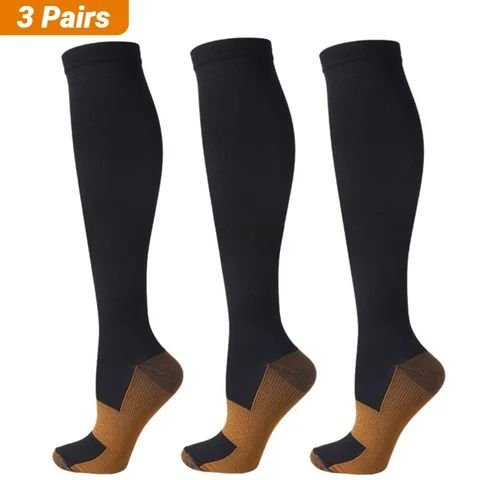
They are knee-high socks knitted more firmly at the ankle, easing off up the calf. People wear them on long flights because their legs feel better for it, and that is the whole claim - they are comfort garments, not medical devices. This is comfort advice, not medical advice.
If you want to try a pair, buy them to your calf measurement rather than your shoe size, and put them on at home before you travel - the flight sock guide covers choosing, and the flights and travel range has them.
What to wear
Shoes you can slip off easily. You will want them off, and laces in a confined seat are a nuisance.
Loose trousers. Anything gripping your waist or calves for ten hours becomes irritating.
Layers. Cabins are colder than people expect, especially at night, and you cannot ask for the heating to be turned up.
What to have with you in the seat
- A water bottle, filled after security.
- A warm layer you can reach without standing.
- Lip balm. The air is very dry and this is a small thing that helps a lot.
- A spare pair of socks, which sounds odd and is one of the best things in the bag.
- Anything medical you need, always in the cabin, never in the hold.
The packing guide covers the rest.
Which socks, if you want to try a pair
Knee-high, plain, in a breathable blend, bought to your calf measurement.
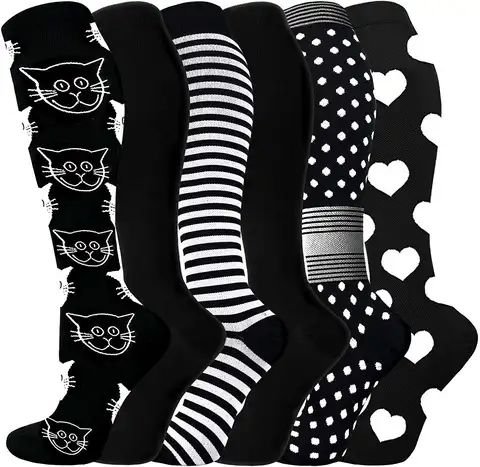
Grey Stride is the single-pair starting point at £9.99, and the classic three-pack covers a return trip with a spare. If you would rather they did not look functional, the patterned four-pack reads as ordinary socks.
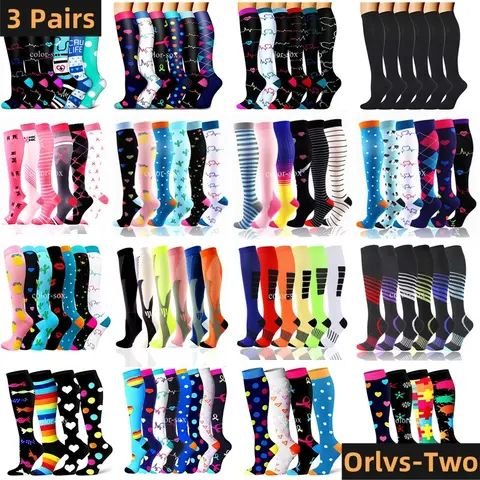
Anything in the knee-high range works, and the multipacks are cheaper per pair if you are buying more than one.
Things nobody tells first-time long-haul flyers
Your feet may not go back into your shoes as easily near the end. This is ordinary. Wear shoes with some give and put them back on before the final approach rather than in the last five minutes.
It gets cold at night. The blanket is thin and there is no other one.
The meal timings will not match your hunger, because they are set by the schedule.
You can ask crew for water any time, not only during the service. Most people do not realise this.
In your seat
Shoes off once you are settled. Roll your ankles now and then. Flex your feet, push your heels down, lift your toes. Change position rather than sitting one way for the whole flight.
None of this needs to be a routine you follow religiously - just do a bit of it now and then rather than none of it at all.
Drinking
More water than you think, and it is normal to drink far less on a plane than you would at home simply because it is less convenient. Having your own bottle solves that.
Alcohol on a long sector tends to leave people feeling worse at the other end, and it does not count towards the water.
When you land
The journey is not over. There is the walk through the terminal, immigration, baggage and getting to where you are staying, which together can be another two hours.
Keep your socks on for all of it, then get your feet up for twenty minutes when you arrive before doing anything else - the after-the-flight guide covers landing day.
If you are nervous generally
Being physically comfortable helps more than people expect. Warm feet, water, a layer and being able to move about are all small things, and together they make a long flight considerably less of an ordeal - the full travel guide has everything in one place.
The short version
- Legs feel heavy on a long flight because of hours of sitting still, not the flight itself.
- Getting up and walking every few hours is the single most useful thing you can do.
- Shoes you can slip off, loose trousers, and layers - cabins are colder than expected.
- Your feet may not go into your shoes as easily near the end. That is ordinary.
- You can ask crew for water any time, not only during the service.
Frequently asked questions
What happens to your legs on a long flight?
Nothing dramatic - you sit in one position with limited room for hours, so by the second half most people notice their legs feel heavier and stiffer and their shoes feel tighter than at the gate.
What is the most useful thing I can do?
Get up and walk, every few hours, whenever the seatbelt sign is off and the aisle is clear. It feels awkward the first time on a plane full of sleeping people, and nobody minds at all.
What are compression socks, simply?
Knee-high socks knitted more firmly at the ankle and easing up the calf. People wear them on long flights because their legs feel better for it. They are comfort garments rather than medical devices.
Why do my shoes feel tight by the end of a flight?
It is an ordinary consequence of sitting still for hours. Wear shoes with some give rather than your smartest pair, and put them back on before the final approach rather than in the last five minutes.
How long should I keep my socks on after landing?
Through the terminal walk, immigration, baggage and the journey to where you are staying - which together can be another two hours. Then get your feet up for twenty minutes before doing anything else.