Quick answer: For flying, choose knee-high length in a calf width measured to your own leg, in a breathable blend. Put them on before you leave home rather than at the gate, and pick a pair you can get on and off easily in a cramped seat.
Thirty years of long-haul taught me that the people who arrive feeling human are the ones who thought about their legs before boarding, not somewhere over Greenland.
Knee-high, not ankle
The single most common mistake. Ankle socks are comfortable and they do nothing for the part of your leg that actually feels it after six hours in a seat - the calf. A flight sock wants to cover the calf, with the firmest part at the ankle easing off as it goes up. That is what the graduated knit is for, and an ankle sock has nowhere to graduate to.
Over-knee and thigh-high are an option but rarely necessary for flying, and they are more awkward in a seat - the knee-high range covers choosing between them.
Calf width is what people get wrong
Shoe size is the easy number. Calf width is the one that decides whether you spend the flight comfortable or fidgeting. A sock that is too tight at the top will roll, dig and generally annoy you for the entire journey; too loose and it slides down and does nothing at all.
Measure the widest part of your calf before you buy, first thing in the morning. If you are between sizes or have a fuller calf, size for the calf rather than the foot - the plus size and wide calf range is cut genuinely wider rather than just longer, and the wide-calf range covers it properly.
Fabric, because cabin air is dry
Cabins run dry and warm, and you are wearing the same socks for a very long stretch. A breathable blend is worth having - bamboo-rich fabrics feel cooler and stay feeling fresher over a long sector than heavy cotton does - the fabric comparison covers the differences.
Avoid anything thick. A bulky sock is warmer than you want in a cabin and harder to get a shoe back on over.
Put them on at home
The advice I gave more passengers than any other. Getting a snug knee-high sock on properly needs somewhere to sit, both hands, and no audience - none of which you have at the gate or in a seat. Put them on before you leave the house, over clean dry feet, and forget about them.
the travel guide covers the whole journey, and the easy-on range covers the technique if you find them a struggle.
If getting them on is the problem
It is for plenty of people, and the answer is a zip. A zip-up sock opens flat, you step in, and you close it - no wrestling. That matters more with age, with a bad back, or when you are already carrying a bump - the zip-up range covers those, and the flights and travel range is honest about the trade-offs.
What to actually pack
- Wear one pair, pack one spare. Long-haul, delays and a missed connection all argue for a second pair in your hand luggage.
- Shoes you can get on and off easily, because you will want to.
- Something to sit on when you change - the seat, not the toilet floor.
the travel guide covers the rest of the bag.
Which of ours suit flying
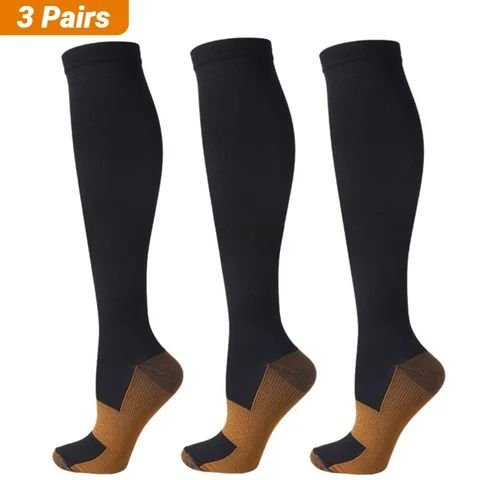
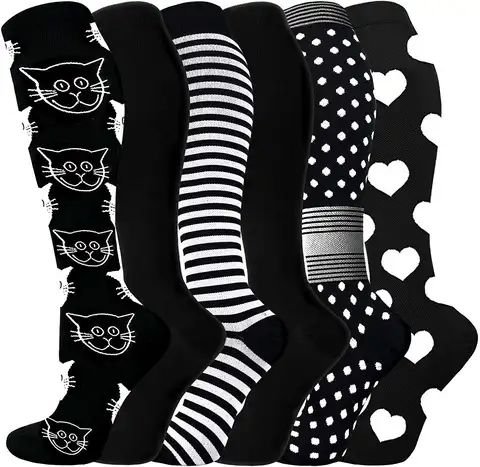
Anything knee-high in a breathable blend. The classic knee-high three-pack is the straightforward answer and gives you the spare pair built in. Grey Stride is plain enough for anyone. If you would rather not look like you are wearing travel socks, the patterned four-pack reads as ordinary socks - the flights and travel collection has the rest.
How many pairs for a trip
One on, one spare, and a third if you are away more than a week.
They want washing after each wear, and hotel sink washing is fine but slow to dry. A three-pack removes the whole problem and costs less per pair than buying singles - the multipacks cover that.
If you fly often, keep a dedicated travel pair in your case so packing is one less decision.
What people get wrong
Three things, in order of how often I saw them.
Buying to shoe size alone, which ignores the number that actually decides comfort. Putting them on at the gate, which means they go on badly or not at all. And taking them off on the last leg because home feels close, which skips the part of the journey where you have already done all the sitting.
Coach, car and train
Everything above applies to any journey where you are sitting still for hours - the aircraft is not the point, the sitting is. A twelve-hour coach journey asks the same of your legs as a flight does - the knee-high range covers those.
This is comfort advice, not medical advice. If anything about your legs is worrying you, that is a conversation for a pharmacist or GP rather than a sock shop. the multipacks has everything in one place.
The short version
- Knee-high, not ankle - the calf is the part that feels a long flight.
- Measure your calf at its widest, in the morning, and size for the calf not the foot.
- Choose a breathable blend; cabins run dry and warm and you wear them for hours.
- Put them on at home, where you have a seat and both hands.
- Wear one pair and pack a spare - delays and connections make that worth it.
Frequently asked questions
What length should flight socks be?
Knee-high. The calf is the part that feels a long sitting spell, and the graduated knit needs the length to work - firmest at the ankle, easing up the leg. An ankle sock has nowhere to graduate to.
How do I get the size right for flying?
Measure the widest part of your calf first thing in the morning, and size for that rather than your shoe size. Too tight at the top and it rolls and digs; too loose and it slides down and does nothing.
When should I put flight socks on?
At home before you leave. Getting a snug knee-high on properly needs somewhere to sit and both hands, which you do not have at the gate or in a seat. Put them on over clean dry feet and forget them.
What if I struggle to pull them on?
Use a zip-up style. It opens flat, you step in and close it, with no wrestling - which matters more with a bad back, with age, or when you are already carrying a bump.
Do the same socks work for coach and car journeys?
Yes. It is the sitting still for hours that matters rather than the aircraft, so a long coach or car journey asks the same of your legs and the same knee-high sock suits it.