Quick answer: City breaks involve far more walking than people plan for, often on hard pavement in shoes chosen for looks. Pack a pair for the journey and a pair for the days, choose shoes you have already broken in, and expect to feel it around day three.
A city break is sold as a rest and is in practice a walking holiday with better food. The step counts people come back with are frequently double their normal week.
Why they are harder on your legs than they look
Three things stack up.
The distance. Sightseeing on foot adds up fast, and it is easy to do fifteen or twenty thousand steps without noticing because you are enjoying yourself.
The surface. Pavements, cobbles and museum floors are all hard, and they are harder than the varied ground you would cover on a country walk.
The shoes. People pack shoes chosen to look right with what they are wearing rather than shoes chosen to walk twelve miles in, and then walk twelve miles in them.
The journey there
Whatever the flight or train, the same rules apply: socks on before you leave home, knee-high, breathable. Keep them on through the transfer at the far end, which after a flight is often another two hours of standing and sitting - the travel guide covers the journey.
The days themselves
This is the part people do not plan for. A day of walking a city is closer to a shift on your feet than to a flight, so the guidance for people who stand all day fits better than the travel guidance does.
Wear a fresh pair each day, take a proper sit-down break somewhere in the middle rather than pushing through, and get your feet up when you get back to the room before going out for the evening - the on-your-feet guide covers those days.
Day three is when people notice
Consistently. Day one you are fresh, day two you are enjoying yourself, and day three your legs present the bill for both.
If a trip is four days or longer, plan the lightest day for the third one - a gallery, a long lunch, something seated. It is a better use of the day than gritting your teeth through another walking itinerary.
How many pairs
One for the journey out, one per full day, one for the journey home. For a four-day break that is six, which sounds like a lot until you consider they weigh nothing and take almost no space in a case.
Multipacks make this straightforward and cheap - the multipacks cover it, and the spending guide covers value.
Shoes matter more than socks here
It would be dishonest not to say it. On a walking holiday, the shoes are doing most of the work, and no sock rescues a pair you have not broken in.
Take shoes you have already walked a long way in. Take two pairs if you can, and alternate them - it gives each pair a day to dry out and changes where the pressure falls. New shoes bought for a trip are the single most common way people ruin one.
Hot destinations
A fair concern - a knee-high in thirty degrees is not appealing. Two things help.
Choose a bamboo-rich or otherwise breathable blend, which feels considerably cooler than a heavy cotton - the fabric guide covers the differences. And consider wearing them for the journey and the evenings rather than through the hottest part of the day.
Footless calf sleeves are the other option in heat, worn over an ordinary ankle sock - the footless range covers those.
Washing on the road
Hotel sink, cool water, small amount of soap, squeeze gently. To dry, roll the sock in a towel and press, then hang it somewhere with moving air.
Not on the radiator and not in direct sun on a windowsill - both are heat and heat is what finishes them - the washing guide covers the method.
The flight home
Keep a clean pair back for it. Having to choose between a worn pair and no pair on the last morning is entirely avoidable, and the journey home is usually the one where you are most tired - the after-the-flight guide covers arriving.
Museums and galleries
The specific version of this that catches people out.
A gallery day feels restful and is several hours of slow standing on hard polished floors, which is more demanding than walking the same time outdoors. Slow standing is the hardest thing you can ask of your legs, and it is why people leave a museum feeling more tired than they expected.
Sit down on the benches that exist for exactly this, rather than walking past them - the work range is cut for standing days.
Which to pack
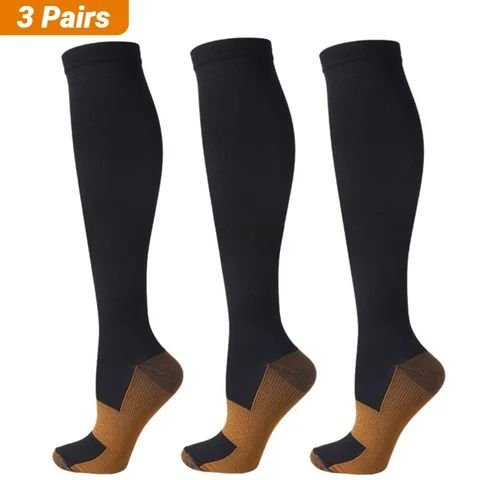
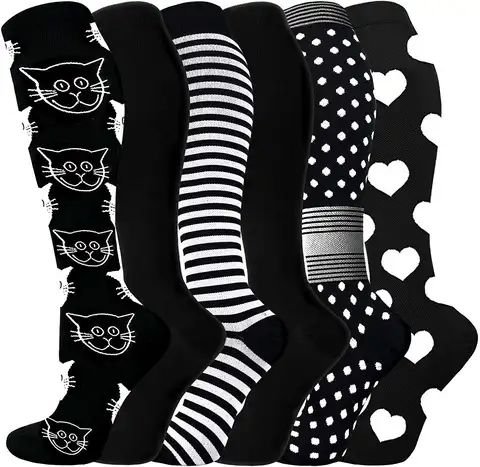
The classic knee-high three-pack covers a short break on its own. For a longer trip the patterned four-pack adds variety and does not look like travel kit in photographs - the flights and travel range has the rest.
This is comfort advice, not medical advice.
The short version
- A city break is a walking holiday - step counts are often double a normal week.
- The days are closer to a shift on your feet than to a flight.
- Day three is when people notice; plan the lightest day for then.
- Pack one pair per day plus one for each journey - they weigh nothing.
- Shoes matter more than socks, and new shoes bought for a trip ruin more holidays than anything.
Frequently asked questions
Do I need compression socks for a city break?
They suit it better than people expect. Sightseeing on foot regularly means fifteen to twenty thousand steps a day on hard pavement, in shoes chosen for how they look, which is a demanding combination.
How many pairs should I pack?
One for the journey out, one per full day, and one for the journey home. For a four-day break that is six pairs, which sounds like a lot until you remember they weigh nothing and take almost no space.
Why do my legs feel worst on day three?
Because day one you are fresh and day two you are enjoying yourself, and the accumulated walking presents itself on the third. On a trip of four days or more, plan the lightest day for then.
What about hot destinations?
Choose a bamboo-rich or otherwise breathable blend, which feels considerably cooler than heavy cotton, and consider wearing them for the journey and evenings rather than the hottest part of the day.
How do I wash them on holiday?
Hotel sink, cool water, a little soap, squeezing gently rather than wringing. Roll in a towel and press to get the water out, then hang somewhere with air - never on a radiator or a sunny windowsill.