Quick answer: Check five things: a wide soft top band, a style you can put on without bending, a toe you find comfortable, a calf width with room to grow, and enough pairs to keep a clean one available. Everything else is preference.
This is the checklist I wish someone had handed me at about twenty weeks, rather than the list of features shops tend to lead with.
I am not a clinician. This is about comfort and fit only - if something about how you are feeling is on your mind, ask your midwife.
1. The top band
Start here, because it causes more discomfort than everything else combined. You want a band that is wide, soft and flat rather than a narrow strip of elastic. It should feel evenly snug and leave at most a faint line, not a groove.
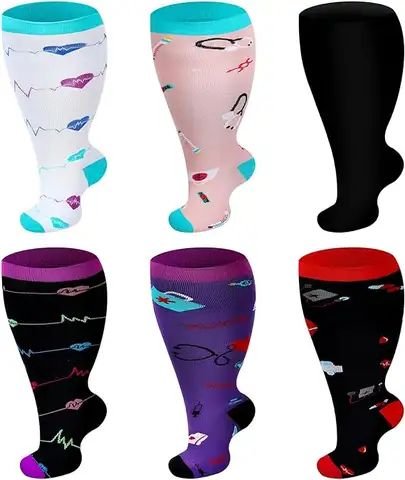
If a sock digs at the top, the calf is too narrow for you - that is a sizing problem, not something to put up with - the wide-calf range is knitted wider through the calf rather than just made longer.
2. How you will actually get it on
Be realistic about the next few months. Anything that needs you to fold forward and haul with both hands will stop being practical.
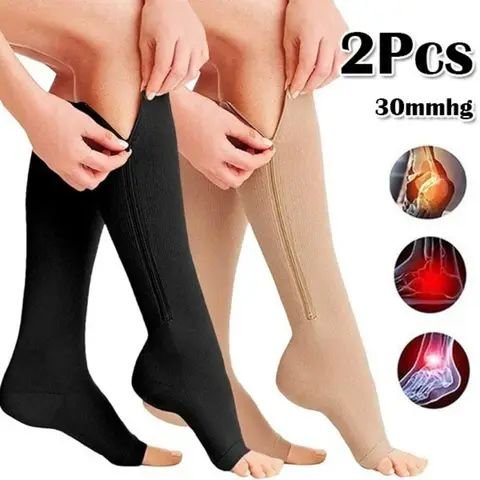
Zip-up styles open flat and close around the leg, which removes the problem entirely - the zip-up range covers those. Open-toe styles slide on more easily. Footless sleeves skip the foot altogether - the zip-up range goes through each.
3. Open toe or closed toe
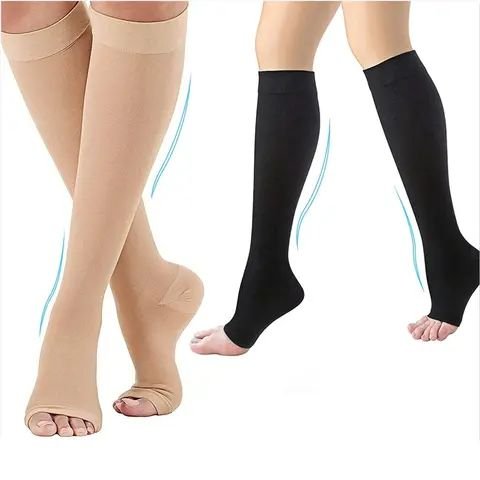
Genuinely a preference rather than a right answer. Open-toe is cooler, easier to get on, and lets you wear them with more kinds of shoe. Closed-toe feels more like a normal sock and keeps your feet warm in winter. Plenty of people end up with both - the open-toe and footless range covers the options, and the open-toe and footless range covers sizing them.
4. Sizing with room to move
Measure your calf at its widest, first thing in the morning, and buy to that. If you are between sizes, take the larger one. Re-measure every few weeks rather than assuming - things change, and a pair that fitted in month four may not in month eight - the pregnancy comfort guide covers this, and the sizing and fit guide shows where the tape goes.
5. Enough pairs
Two is the practical minimum and three is better. They need washing after each wear, and there is a particular kind of irritation in reaching for the pair you wanted and finding it damp. Multipacks make that much cheaper - the multipacks are the sensible route, and the multipacks covers value.
6. A heel that sits where your heel is
Not on most checklists and worth adding.
A knee-high has a shaped heel, and it should sit on yours. If it rides up the back of your foot, the sock is too long or too short in the leg for you, and the graduated part is sitting in the wrong place on your calf.
Put a new pair on and walk about for twenty minutes before committing to a full day in them. It is much easier to spot then than at hour ten.
Where to put them on
Sitting on the edge of the bed, first thing, before you have been up and about.
That is the moment your legs are at their smallest and the sock goes on most easily - and it means the job is done before the day gets away from you. Keeping the pair on the bedside table rather than in a drawer across the room makes that far more likely to happen.
If bending is already difficult, this is the point to switch to a zip rather than to persevere - the maternity range covers those.
What not to worry about
Colour and pattern. Buy what you like; it makes no difference to how they work and it does make a difference to whether you wear them.
Brand names. Fit and fabric are what you notice.
Having a full drawer. Three good pairs beat eight that do not fit.
Washing them
Cool wash, inside out, no tumble dryer. Heat destroys the stretch, and a sock that has lost its stretch is finished no matter how new it looks. Dry flat or on a line - the care and FAQs guide covers it properly, and the care guide covers storage.
Wearing them day to day
Put them on first thing, sitting down, before you have been on your feet. Take them off before bed unless someone has told you otherwise. And if a pair starts to feel different from how it felt when new, check the fit rather than assuming that is just how it is now - the pregnancy guide covers the whole thing, and the maternity range cover what else helps.
This is comfort advice, not medical advice. Browse the maternity range or the full range.
The short version
- The top band causes more discomfort than everything else put together.
- Choose a style you can still put on unaided in three months' time.
- Open toe versus closed toe is preference - many people end up with both.
- Re-measure your calf every few weeks rather than trusting an old number.
- Two pairs minimum, three is better - they need washing after every wear.
Frequently asked questions
What is the most important thing to check?
The top band. It causes more discomfort than everything else combined. You want it wide, soft and flat rather than a narrow strip of elastic, leaving at most a faint line rather than a groove.
Should I choose open toe or closed toe?
It is a preference. Open-toe is cooler, slides on more easily and works with more shoes; closed-toe feels like a normal sock and keeps feet warm in winter. Plenty of people end up owning both.
How often should I re-measure?
Every few weeks, and any time a pair starts feeling different from when it was new. A size that fitted in month four may not in month eight, and guessing is what leads to a band that digs.
How many pairs should I buy?
Two at minimum, three ideally. They want washing after each wear, and multipacks work out considerably cheaper per pair than singles. Three pairs that fit beat eight that do not.
How should I wash them?
Cool wash at 30, inside out, and never in a tumble dryer. Heat destroys the stretch, and once that has gone the sock is finished however new it looks. Dry flat or on a line.