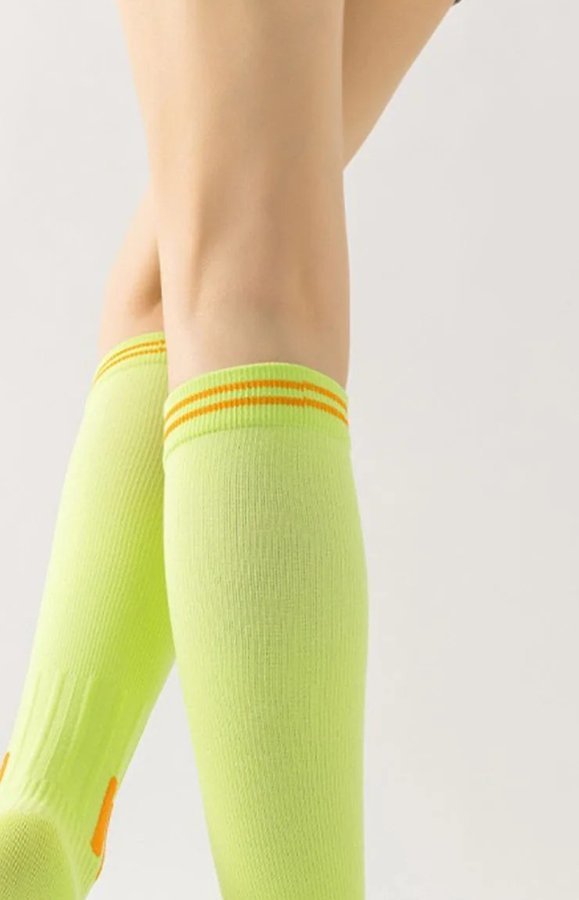
Quick answer: Put a clean pair on after you have showered and changed, and wear them for the evening or the following day. It needs no change to how you train, no decision during a session, and it is where most runners report the clearest benefit.
Of all the runners I coach who use compression socks, more of them wear them on the sofa than on the road. That is not a failure of the product - it is people finding where it actually suits them.
What a recovery day actually is
The day after something hard - a long run, a session, a race - when you are either not running or running very easily.
The point is not to do nothing. Complete rest is usually worse than gentle movement, and the runners who bounce back best are generally the ones who walk, spin easily or jog slowly rather than sitting still for twenty-four hours.
When to put them on
After you have finished, showered and changed. Not straight off a run onto damp legs, and not over the socks you have just run in.
A clean pair, dry feet, and then wear them for the evening. If you have had a very hard day, wearing them the following day as well is what a lot of runners do - the sport and running range covers what to wear.
How long to keep them on
The evening is the common pattern - put them on after your shower and take them off before bed.
Wearing them overnight is a separate question and one people ask constantly. Most runners do not, and comfort is the guide rather than any rule - the care and FAQs guide covers sleeping in them.
What else actually helps
Being honest, more than the socks do.
Moving gently. A walk, an easy spin, a slow jog. Better than lying still.
Eating properly and soon. The most reliable thing on this list and the one runners skip.
Sleep. Genuinely the biggest lever available and nobody wants to hear it.
Getting your feet up for twenty minutes at some point, higher than a chair.
The socks sit alongside those, not instead of them.
Sleeves for recovery
A neat option, because you can put a calf sleeve on over ordinary socks or bare legs without changing what is on your feet - the all-day sleeves suit exactly this, and the footless range has the others.
They are also easier to get on when you are tired, which on the evening after a marathon is not a trivial consideration.
After a race specifically
The clearest case, and the one where most runners first try this.
A race is a bigger effort than training and is usually followed by standing around, a long journey home, or both - which is why the day after a race often feels worse than the day after an equivalent training run.
Wear a pair for the journey home as well as the evening. The travel is a genuine part of what makes race day hard on your legs - the travel range covers journeys.
Between two hard days
If you have a session on Tuesday and another on Thursday, Wednesday is the day this matters. Easy running, proper food, and a pair on in the evening is a reasonable routine.
Building a habit around it beats deciding each time, in the same way that a training plan beats improvising - the sport and running range covers a block.
Sizing for recovery wear
The same as for running: measure your calf and buy to it. Runners frequently need more calf room than a shoe-size chart suggests.
If anything, a recovery pair can be at the more comfortable end of your range, since you will be wearing it for several hours sitting still rather than moving - the sizing guide covers measuring, and the wide-calf range covers fuller calves.
How many
If you are only wearing them for recovery, two or three pairs is plenty - you are wearing them a couple of evenings a week rather than daily - the multipacks still work out cheaper per pair.
Travelling to and from training
An overlooked case, particularly for club runners.
If you drive forty minutes to a track session and forty minutes home afterwards, that is over an hour of sitting still bracketing a hard effort. Wearing a pair for the journey home is the easiest version of recovery wear there is, because you were going to be sitting anyway.
It also means the socks are already on when you get in - the travel range covers longer journeys.
What I would not claim
That they replace anything. Sleep, food and easy movement do the heavy lifting on a recovery day, and a sock is a comfort garment that a lot of runners like wearing while those happen.
Recovery for people with jobs
Most recovery advice assumes a day with nothing in it. Almost nobody has that.
So here is the version for a runner who trains at six and is at a desk by nine.
Put a clean pair on after the shower, not after the run. You want them on for the sitting-down part of the day, which is the eight hours you are about to spend at a desk, rather than for the twenty minutes you are making breakfast.
Keep them on until you get home. That is the whole intervention, and it costs you nothing in time.
Then take them off for the evening. Skin does better for the hours without, and you want them off well before you sleep.
What matters more than any of this is the ten minutes with your feet up before you eat, which almost everyone skips because it feels like doing nothing. It is the highest-value ten minutes in the day.
On a genuinely hard day, the honest order is sleep, then food, then feet up, then socks. The socks are last on that list for a reason.
And on the days you do nothing at all, do nothing at all. A rest day that turns into a chores day is not a rest day, whatever you are wearing.
This is comfort advice, not medical advice, and I am a coach rather than a clinician - the running and sport guide covers the wider subject.
The short version
- More runners wear them on the sofa than on the road, and that is a legitimate answer.
- Put a clean pair on after showering, not straight off a run onto damp legs.
- The evening is the usual pattern; overnight is a separate question with no rule.
- Sleep, food and gentle movement do the heavy lifting - the socks sit alongside them.
- After a race, wear a pair for the journey home as well as the evening.
Frequently asked questions
When should I put compression socks on after a run?
After you have finished, showered and changed - a clean pair on dry feet rather than straight off a run onto damp legs or over the socks you have just run in. Then wear them for the evening.
How long should I wear them for recovery?
The evening is the common pattern, put on after your shower and taken off before bed. Wearing them overnight is a separate question that most runners answer no to, with comfort as the guide.
Do they replace proper recovery?
No, and it would be dishonest to suggest so. Sleep, eating properly and soon, and gentle movement do the heavy lifting. The socks sit alongside those rather than instead of them.
Are calf sleeves better for recovery?
They are a neat option, since you can put them on over ordinary socks or bare legs without changing what is on your feet, and they are easier to get on when you are tired after a hard effort.
Why does the day after a race feel worse than after a long run?
Partly the bigger effort, and partly what surrounds it - standing about before and after, and often a long journey home. The travel is a genuine part of what makes race day hard on your legs.