Quick answer: Choose by calf width first, then shoe size, then length. Most discomfort comes from a top band that is too tight rather than the sock itself, so measure your calf at its widest and size to that even if it means going up.
I measured people for a living for years, and women's hosiery is where I saw the same mistake most often: buying to shoe size and hoping the leg sorts itself out.
Calf width first, shoe size second
A knee-high sock has to fit two quite different parts of you, and only one of them is your foot. The top of the calf is where almost every comfort complaint comes from - a band that is too tight will roll, leave a mark and irritate you all day, and one that is too loose lets the sock slide down where it does nothing.
So measure the widest part of your calf, first thing in the morning before your legs have done anything, and choose to that number. If your calf sits between two sizes, go up. A slightly generous calf on a correctly-sized foot is comfortable; the reverse is not - the sizing and fit guide shows exactly where to put the tape.
Wide calf is a fit, not a size
Worth being clear about, because the labelling across the industry is unhelpful. A genuine wide-calf sock is knitted wider through the calf and ankle, with a top band that has more give. A sock that has simply been made longer is not the same thing and will still dig.
If knee-highs have always felt tight at the top, this is almost certainly why - the plus size and wide calf range is cut properly, and the plus size range covers what to look for.
Length, by what you are doing
Knee-high suits almost everything - work, flying, a long day on your feet. It is the default and the one to buy first.
Ankle and low-cut disappear in trainers and suit warm weather, but they cover none of the calf - the ankle range covers those.
Open-toe suits anyone who dislikes something over their toes, or who wants to wear them with certain shoes - the open-toe and footless range covers those.
Footless calf sleeves go over your own socks, which is useful in the gym or on a warm day - the knee-high range compares them all.
Getting them on
Plenty of people find a snug knee-high genuinely hard to pull on, and there is no prize for struggling. Two things help: put them on first thing, when legs are at their smallest, and turn the sock inside out down to the heel, place the heel, then roll it up the leg rather than hauling from the top.
If that is still a fight, a zip-up style opens flat and closes around the leg instead - the easy-on range covers the technique properly.
Style, since you will wear them more if you like them
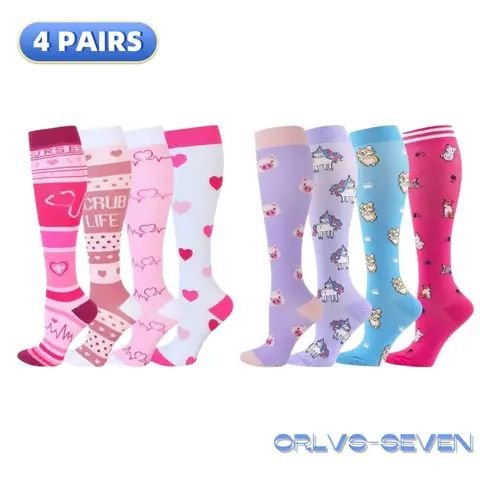
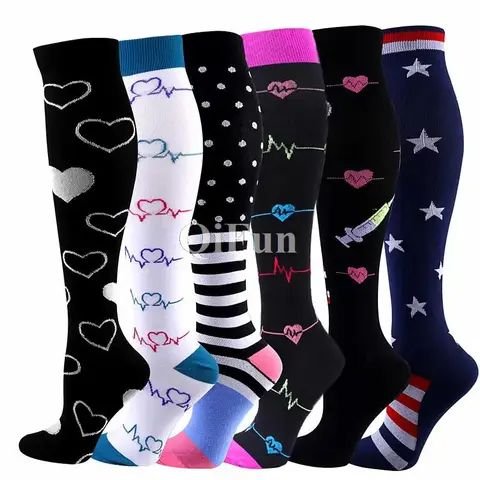
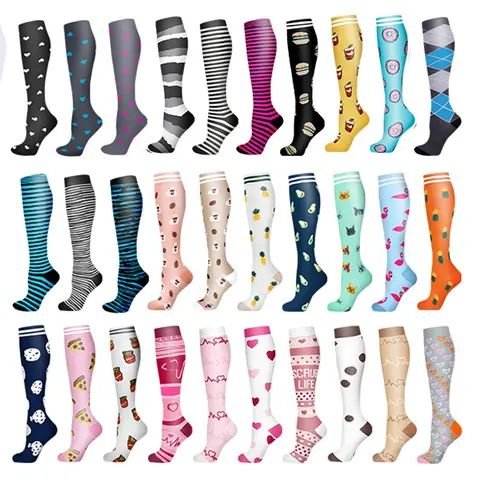
This matters more than it sounds. A drawer of beige socks you find depressing gets worn less than a drawer you actually like. Pretty in Pink and the pastel print six-pack read as ordinary socks. Soft Neutrals is the quieter option - the women's range has the lot.
Wearing them with what you already own
A practical worry, and an easy one to solve.
Knee-highs sit under trousers without showing, and under a midi skirt or dress with boots they simply read as socks. With trainers, a low-cut or ankle style disappears entirely.
The pairs people struggle with are the ones under close-fitting boots, where any sock adds bulk - there, a thinner knit or a footless sleeve over your own sock is the easier answer - the footless range covers those.
Two things worth checking on arrival
Before you wear a new pair for a full day, put them on and walk about the house for twenty minutes.
Check the top band leaves at most a faint line rather than a groove, and check the heel sits on your heel rather than riding up the back of your foot. A misplaced heel means the length is wrong for you and the graduation is sitting in the wrong place.
Both are easy to spot early and irritating to discover at hour nine of a shift.
How many to buy
More than one pair, because they need washing after each wear and they last longer in rotation. Three is a sensible starting point and multipacks are considerably cheaper per pair than singles - the multipacks are the cheapest way in, and the multipacks covers what is worth paying for.
Making them last
Wash at 30 inside out, and keep them out of the tumble dryer. Heat is what destroys the elastane, and once that has gone the sock never grips properly again however new it looks - the care and FAQs guide covers it, and the care and FAQs guide covers when a pair is finished.
This is comfort advice, not medical advice. Browse women's, everyday comfort or the complete buyer's guide.
The short version
- Measure the widest part of your calf first, in the morning, and size to that.
- If you are between calf sizes, go up - a generous calf is comfortable, a tight one is not.
- Wide calf means knitted wider, not simply made longer.
- Knee-high is the default; ankle, open-toe and footless are for specific jobs.
- Buy three pairs rather than one - they need washing after each wear and last longer rotated.
Frequently asked questions
How do I choose the right size?
By calf width first, then shoe size. Measure the widest part of your calf first thing in the morning and choose to that number. If you fall between two sizes, go up - a slightly generous calf is comfortable, a tight one is not.
Why do knee-highs always feel tight at the top?
Almost always because the calf is wider than the sock was cut for. A genuine wide-calf sock is knitted wider through the calf and ankle with more give in the top band, rather than simply made longer.
What length should I buy first?
Knee-high. It suits work, flying and long days on your feet, and it is the length the graduated knit is designed around. Ankle, open-toe and footless styles are worth adding later for specific situations.
How many pairs do I need?
At least three. They want washing after each wear, and a set worn in rotation lasts noticeably longer than one pair worn constantly. Multipacks work out considerably cheaper per pair than buying singles.
How do I stop them going baggy?
Keep them out of the tumble dryer and wash at 30 degrees, inside out. Heat is what destroys the elastane, and once that has gone the sock will never grip properly again however new it looks.