Quick answer: Put them on at home before you travel, wear knee-high length in a calf width measured to your leg, and keep them on for the whole journey including the airport. Move about when you reasonably can, and take them off once you are home.
I flew long-haul for three decades. Half the crew wore them, the sensible half, and the questions passengers asked were always the same handful.
Put them on before you leave the house
The single most useful thing on this page. A snug knee-high sock needs a seat, both hands and a bit of room to get on properly - none of which exists at a gate or in seat 43K. Put them on at home over clean dry feet and stop thinking about it.
It also means you are wearing them for the drive, the check-in queue and the wait, which is a decent chunk of sitting and standing that people forget about.
Knee-high, every time
The calf is the part of you that notices a long journey, so the sock needs to cover it. Ankle socks are perfectly nice socks and they do nothing for this. Over-knee works but is more faff in a seat - the knee-high range compares them.
Get the calf width right or none of it is comfortable
The most common reason someone gives up on flight socks is that the pair they bought was too tight at the top and drove them mad by hour three. That is a sizing problem.
Measure the widest part of your calf in the morning, buy to that, and go up if you are between sizes. If knee-highs have always dug in, look at a genuine wide-calf cut - the wide-calf range is knitted wider rather than just longer, and the sizing and fit guide shows how.
What to wear with them
Shoes you can slip on and off without a fight, because you will want to. Something loose over the top - jeans that grip the calf work against the sock. And bring a light layer, because cabins get cold and warm feet make everything more bearable.
the travel guide covers the rest.
Keep them on for the whole thing
Including the transfer, the connection and the wait at baggage reclaim. The journey does not end when the aircraft does, and taking them off in the terminal because you are nearly home is the point at which you have done the work and skipped the last bit.
Take them off once you are actually home and can put your feet up - the travel guide covers landing day.
Moving about
Walk when it is sensible and safe to do so, which on a long sector usually means when the seatbelt sign is off and the aisle is clear. If you cannot get up, rolling your ankles and flexing your feet in your seat is something rather than nothing. Aisle seats make this all easier, which is why crew book them.
What people ask most
"Can I sleep in them on the flight?" Plenty of people do on a long sector. Overnight at home every night is a different question - the FAQs guide covers that.
"Do I need a new pair for the way back?" Ideally yes, or at least a clean pair. Pack a spare - the multipacks covers what else earns its space.
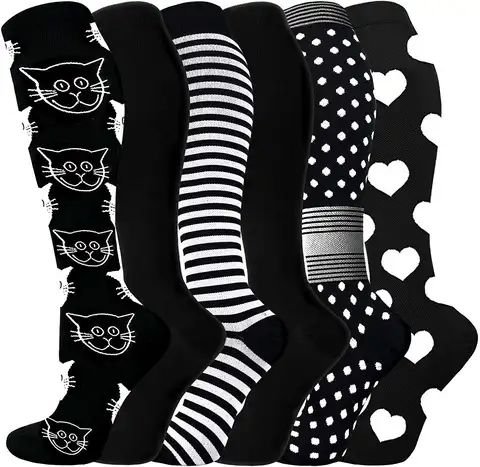
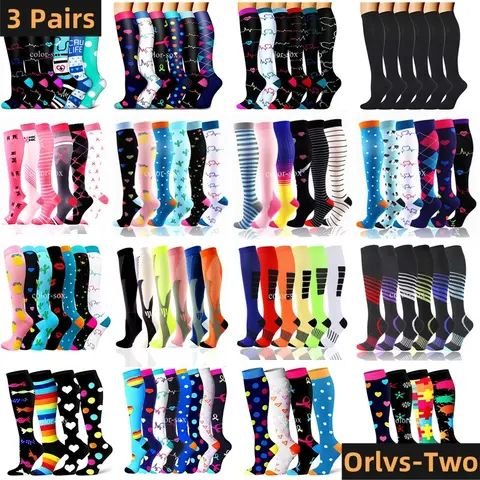
"Do they have to look like flight socks?" No - the patterned four-pack and Sunset Fade read as ordinary socks.
What crew actually did
Since people always asked.
The ones who wore them put them on before leaving home, wore them for the whole duty including the hotel transfer, and changed into a fresh pair for the return sector. Nobody wrestled with socks in a galley.
The other habit worth stealing: shoes off the moment it was reasonable, and a proper walk about rather than a shuffle. On a long sector that is the difference between arriving functional and arriving wrecked.
Getting a pair through security
A small practical point that catches people out.
You will likely be asked to take your shoes off, and you will be standing on an airport floor in your socks for a minute. That is fine, but it is another reason to wear a pair you are happy to wash afterwards rather than a brand new one you were saving.
It is also a reason to have the spare pair in your hand luggage rather than in the hold.
If you are on your feet rather than sitting
Crew, and anyone working a shift in the air, have the opposite problem to passengers. The same socks suit both - the work range covers working flights, and the work range covers long shifts generally.
Which pair to start with
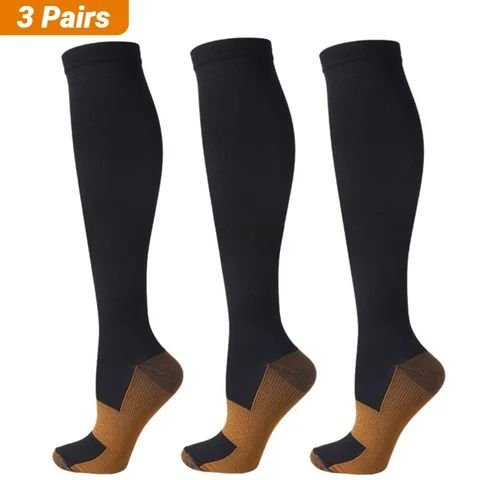
The classic knee-high three-pack covers a return trip with a spare. The flights and travel collection has the rest, and the flights and travel range pulls it all together.
This is comfort advice, not medical advice. If anything about your legs is worrying you, that is a conversation for a pharmacist or GP rather than a sock shop.
The short version
- Put them on at home - a gate or an aircraft seat is the wrong place to start.
- Knee-high only; the calf is the part that notices a long journey.
- Most people who give up bought a pair too tight at the top. That is sizing.
- Keep them on through transfers and baggage reclaim, not just the flight.
- Wear shoes you can slip off, and avoid trousers that grip the calf.
Frequently asked questions
When should I put compression socks on for a flight?
At home before you leave. Getting a snug knee-high on properly needs a seat, both hands and some room, none of which exists at a gate. It also covers the drive, the queue and the wait, which all count.
How long should I keep them on?
For the whole journey, including transfers, connections and baggage reclaim. Taking them off in the terminal because you are nearly home means doing all the work and skipping the last part of it.
Why did my flight socks feel awful last time?
Almost always because they were too tight at the top. Measure the widest part of your calf in the morning and buy to that, going up if you are between sizes, or choose a genuine wide-calf cut.
Can I sleep in them on a long flight?
Plenty of people do on a long sector, and it is a different question from wearing them overnight in bed every night at home. Comfort is the guide - if they feel wrong, take them off.
Do they have to look obviously like flight socks?
No. Patterned and plain everyday designs do exactly the same job and read as ordinary socks, which is largely why people actually keep wearing them rather than leaving them in a drawer.